
Acrylamide Suppliers, Dealers of Acrylamide in Mumbai, India
Acrylamide
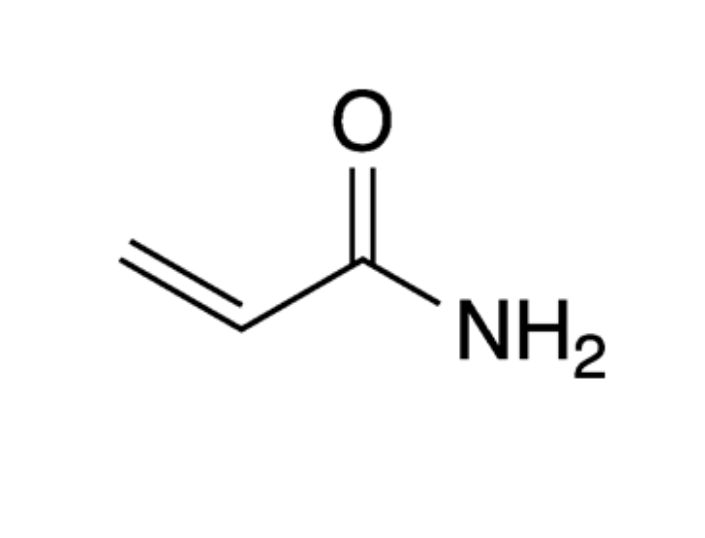
Acrylamide> is a white & odorless crystalline solid. The chemical formula or molecular formula of this item is C₃H₅NO. It is greatly soluble in water & other organic solvents. This makes it a versatile compound in multiple industrial applications. Chiefly, acrylamide is used as a precursor in the production of polyacrylamide. It is a polymer that serves as a flocculant in water treatment. It is also used as a thickener in various products & a medium in electrophoresis for molecular biology studies. Its ability to form water-soluble polymers makes it invaluable in industries ranging from wastewater treatment to paper making.
Despite its boundless industrial use, acrylamide has gained attention due to its formation in few foods during high-temperature cooking processes. These processes includes such as frying, baking, or roasting. This has led to studies on its potential health side-effects. Particularly regarding is its classification as a probable human carcinogen. However, regulatory bodies like the U.S. Food & Drug Administration (FDA) have stated that acrylamide levels in food are mostly low & not a cause for significant concern.
Given its dual presence in industrial applications as well as food, comprehending acrylamide's properties, uses & also safety measures is crucial for industries & users alike.
What is Acrylamide?
Acrylamide is an organic compound characterized by the presence of both amide and alkene functional groups. Structurally, it consists of a vinyl group (CH₂=CH-) attached to an amide group (-CONH₂). This makes it a vinyl-substituted primary amide. This structure imparts high reactivity which allows acrylamide to readily undergo polymerization reactions & forming polyacrylamide.
Industrially, acrylamide is synthesized through the hydration of acrylonitrile. It is a procedure catalyzed by enzymes or acids. The resulting product polyacrylamide is used in multiple applications. This includes water treatment, paper madking & also as a medium in electrophoresis for protein & nucleic acid separation.
In the food industry, acrylamide formation comes during the Maillard reaction. This is a chemical reaction between amino acids & reducing sugars. This gives browned food its distinctive flavor. This reaction is especially prevalent in starchy foods cooked at high degrees. Food items such as fried potatoes & baked goods. While the presence of acrylamide in food has raised health concerns. Now regulatory authorities or institutions continue to assess its impact. They emphasize moderation as well as proper cooking techniques to diminish exposure.
Chemical Specifications
| Property | Details |
|---|---|
| CAS Number | 79-06-1 |
| Chemical Name | IAcrylamide |
| Molecular Formula | C3H5NO |
| Appearance | White crystalline solid |
| Odor | Odorless |
| Molecular Weight | 71.08 g/mol |
| Melting Point | 84.5 °C |
| Boiling Point | Decomposes before boiling |
| Density | 1.322 g/cm³ |
| Solubility | Soluble in water, ethanol, acetone |
| Flash Point | 138 °C |
| Autoignition Temperature | 424 °C |
| Stability | Stable under recommended storage conditions; may polymerize upon exposure to light or heat |
| Hazards | Classified as a probable human carcinogen; neurotoxic upon high exposure |
| Autoignition Temperature | 424 °C |
Specifications
Purity: ≥99%
Appearance: White crystalline solid
Melting Point: 84.5 °C
Solubility: Highly soluble in water and various organic solvents
Stability: Stable when stored properly; sensitive to light and heat
Packaging: Available in various sizes, including 500g, 1kg, 5kg, and 25kg containers.

Handling and Storage
Handling:
Always wear appropriate personal protective equipment (PPE). These equipments include gloves, safety goggles as well as lab coats.
Ensure adequate ventilation in the working area.
Avoid consumption of dust as well as contact with skin or eyes.
Use in a fume hood if possible to prevent exposure to vapors.
Storage:
Store in a cool, dry, moisture-free as well as well-ventilated area.
Keep containers tightly closed and away from sources of heat, light, and ignition.
Store separately from oxidizing agents and acids.
Label containers clearly and keep them out of reach of unauthorized personnel.
Structure of Acrylamide
Acrylamide's molecular structure consists of a vinyl group attached to an amide group.
Structural Formula:
H2C=CH–C(=O)NH2
Vinyl Group (H2C=CH–): This unsaturated hydrocarbon group contributes to acrylamide's ability to undergo polymerization reactions, forming long-chain polymers like polyacrylamide.
Amide Group (–C(=O)NH2): This functional group imparts hydrophilic properties, making acrylamide and its polymers soluble in water and useful in aqueous applications.
The combination of these functional groups makes acrylamide a valuable monomer in producing water-soluble polymers with diverse industrial applications.
Why Choose Shakti Chemicals
Shakti Chemicals stands out as a premier supplier or exporter of high-quality acrylamide, offering products that meet stringent industry standards in India. Here's why partnering with Shakti Chemicals is advantageous in Mumbai:
Quality Assurance:
Our acrylamide is synthesized under controlled conditions, ensuring a purity level of ≥99%. Each batch undergoes rigorous quality control tests to guarantee consistency and reliability.Technical Expertise:
With years of experience in chemical manufacturing and distribution, our team provides expert guidance on product selection, application, and safety protocols.Customized Solutions:
We offer soft packaging ideas to cater to diverse client needs, from small-scale laboratory needs to bulk industrial demands.Regulatory Compliance:
Our products comply with international safety and environmental regulations, accompanied by comprehensive documentation, including Safety Data Sheets (SDS) and Certificates of Analysis (COA).Customer Support:
Our dedicated customer service team ensures prompt responses to inquiries, efficient order processing, and reliable after-sales support.Choosing Shakti Chemicals is the suppliers, dealers, importers, traders in Maharashtra means investing in quality, reliability, and a partnership committed to your success.
Product Pack Size
Shakti Chemicals offers acrylamide in flexible and secure packaging options to meet various industrial and laboratory-scale requirements:
500 grams
1 kilogram
5 kilograms
10 kilograms
25 kilograms
50 kilograms
Custom Bulk Packaging:
Available on requestEach pack is sealed in high-quality containers or bags with clear labeling, including batch number, manufacturing date, and safety instructions.
Applications of Acrylamide
Acrylamide is used in several industrial applications, primarily due to its ability to form polyacrylamide. Here’s how different industries leverage this compound:
1. Water & Wastewater Treatment
Polyacrylamide acts as a powerful flocculant, helping remove suspended particles from municipal and industrial wastewater.
2. Oil and Gas Industry
Used in enhanced oil recovery (EOR) and to reduce water permeability in drilling formations.
3. Mining and Mineral Processing
Facilitates efficient separation of minerals from ores by settling out solids in slurries.
4. Pulp and Paper Industry
Improves paper quality and retention of fiber and fillers by acting as a dry strength agent.
5. Textile Industry
Used as a thickening agent in textile printing pastes and sizing chemicals.
6. Construction
Applied in grouting and soil stabilization to reduce water infiltration in tunnels and dams.
7. Agriculture
Used in superabsorbent polymers (hydrogels) to improve water retention in soil.
8. Molecular Biology
Used in electrophoresis gels (PAGE) for protein and nucleic acid separation in research labs.
9. Cosmetics
Crosslinked forms are used as thickening agents in lotions, creams, and gels.
10. Food Industry (Monitoring Only)
Acrylamide is monitored for food safety and is not intentionally added to food products.
FAQs
1. What is acrylamide used for?
Acrylamide is primarily used to produce polyacrylamide, which serves as a flocculant in water treatment, a thickener in various industries, and a medium in electrophoresis for molecular biology.
2. Is acrylamide hazardous?
Yes, acrylamide is classified as a probable human carcinogen & neurotoxin. Proper handling, storage as well as safety measures are essential to diminish exposure risks.
3. How does acrylamide form in food?
Acrylamide forms in starchy foods during high-temperature cooking processes. These processes are such as frying, baking, or roasting, through the Maillard reaction between amino acids & sugars.
4. Can acrylamide exposure be reduced in cooking?
Yes, by cooking foods at lower temperatures, avoiding overcooking, and employing methods like boiling or steaming, acrylamide formation can be minimized.
5. What precautions should be taken when handling acrylamide?
Use appropriate PPE, work in well-ventilated areas or fume hoods, avoid inhalation and skin contact, and follow proper storage guidelines.
6. How should acrylamide be stored?
Store in a cool, dry, and well-ventilated area, away from heat, light, and incompatible substances. Keep containers tightly closed and properly labeled.
7. Is acrylamide soluble in water?
Yes, acrylamide is highly soluble in water, which facilitates its use in aqueous polymerization processes.
8. What industries utilize acrylamide?
Industries such as water treatment, paper manufacturing, textiles, mining, and molecular biology utilize acrylamide and its polymers for various applications.
9. Does acrylamide have any odor?
No, acrylamide is an odorless compound.
10. What is the shelf life of acrylamide?
When stored under recommended conditions, acrylamide has a stable shelf life. However, it's essential to monitor for any signs of degradation or polymerization.
Contact Us
For more info or to place an order for acids, get in touch with Shakti Chemicals, your trusted supplier of specialty chemicals.
Contact Us- Address: 206-207, 2nd Floor, Wadala Udhyog Bhavan, Naigaon Cross Road, Wadala (West)
- Email: info@shaktichemicals.org
- Phone: +91 4044 0000