
Methylene Diphenyl Diisocyanate (MDI) Suppliers, Dealers in Mumbai, India
Methylene Diphenyl Diisocyanate (MDI)
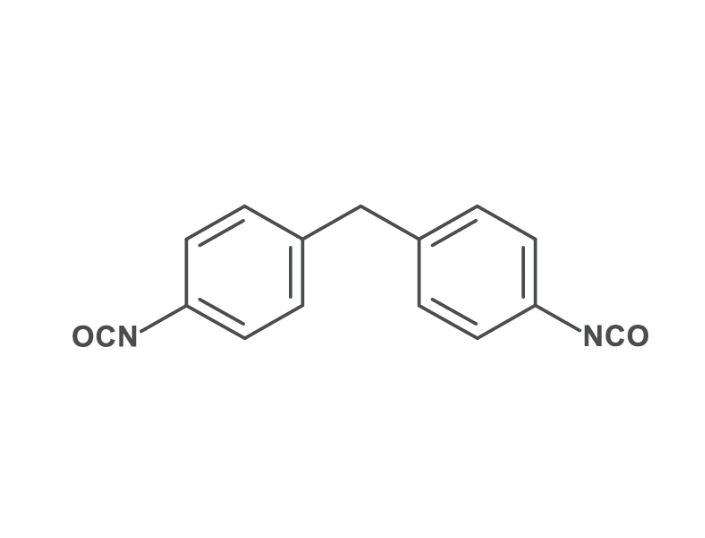
Methylene Diphenyl Diisocyanate (MDI) is a cornerstone material. It is used in the polyurethanes industry. As a versatile aromatic diisocyanate, it offers exceptional thermal insulation, structural rigidity as well as adhesive strength. It is widely produced globally approx over 7 million tonnes annually. MDI remains the most influential diisocyanate as it offers three distinct isomers: 4,4’ MDI (commonly “pure MDI”), 2,4’ MDI & also 2,2’ MDI. These isomers vary in reactivity as well as physical properties. Manufacturers across the world depend on MDI’s ability to react rapidly with polyols to form polyurethane foams, elastomers, adhesives, coatings & also sealants. Understanding its behavior, handling as well as supply options is key for users & also supply chain professionals alike.
What is Methylene Diphenyl Diisocyanate (MDI)
Methylene Diphenyl Diisocyanate , often abbreviated as MDI, is an aromatic diisocyanate with the chemical formula C₁₅H₁₀N₂O₂ and molecular weight approximately 250.3 g/mol. Corporate MDI is found in several isomeric forms—including 4,4’-MDI (pure), 2,4’-MDI, and 2,2’-MDI; the 4,4’ isomer remains the most reactive and thus most heavily utilized. Technically, MDI exists as a pale yellow solid at ambient temperature, with a melting point of roughly 40 °C and remains insoluble in water, where it readily hydrolyzes. Its flash point is measured around 196–214 °C, vapor pressure is extremely low (~0.4–0.7 mPa at 20 °C), and it decomposes before boiling above ~300 °C.
Since its introduction, MDI has become the foundation for polyurethane formation via the reaction of −N=C=O groups with polyols (–OH groups), initiating polymerization and curing. The resulting polyurethane materials are widely used for rigid foam insulation, adhesives, elastomers, coatings, and sealants due to their structural and mechanical versatility. Technological advancements and production containment systems ensure that MDI emissions remain very low in industrial environments.
Chemical Specifications
| Property | Details |
|---|---|
| CAS Number | 101-68-8 |
| Appearance | Pale/yellow solid/crystals/liquid (PMDI) |
| Molecular Formula | C15H10N2O2 |
| Melting point | 37–44 °C |
| Boiling point | Decomposes around 300–392 °C |
| Molecular Weight | 250.26 g/mol |
| Flash point | ~196–214 °C |
| Density (25 °C) | 1.19–1.32 g/cm³ |
| Viscosity (25 °C) | 175–250 mPa·s |
| Vapor pressure (20 °C) | ~0.4–0.7 mPa |
| NCO content | 30–32% |
Specifications
Purity: Typically ≥ 99% in monomer MDI.
Isomer composition: This is predominantly 4,4’-MDI with minor 2,4’- and 2,2’-MDI.
Moisture: Must be low to prevent premature polymerization; water content generally < 500 ppm.
Acid & hydrolyzable chlorine: Kept minimal (≤ 0.05% acid content, ≤ 0.2% chlorine).
Viscosity: Specific grade-dependent; typically 175–250 mPa·s at 25 °C.
Structure of Methylene Diphenyl Diisocyanate (MDI)
MDI consists of two phenyl rings bridged by a methylene group, each phenyl ring bearing an isocyanate (–N=C=O) moiety at different positions. In 4,4’-MDI, isocyanates are para-substituted, yielding high symmetry and optimal reactivity. The other isomers—2,4’ and 2,2’—introduce steric hindrance, lowering reactivity rates. In commercial formulations, polymeric MDI (pMDI) includes oligomerized chains (several phenyl rings) with similar functional isocyanate end groups.
Handling and Storage
-To ensure safety and product integrity:
-Store in sealed, moisture-free containers at 15–25 °C away from ignition sources.
-Use closed, ventilated systems to prevent vapor emissions.
-Equip personnel with PPE: respiratory protection, chemical-resistant gloves, eye protection, and full-body coveralls.
-In case of released MDI mist or vapor, evacuate and ventilate the area; use absorbents for liquid spillages.
-Follow all transportation guidelines for isocyanates—secure packaging, avoid exposure to heat or water, and provide adequate labeling.
Product Pack Size
MDI is typically supplied in:
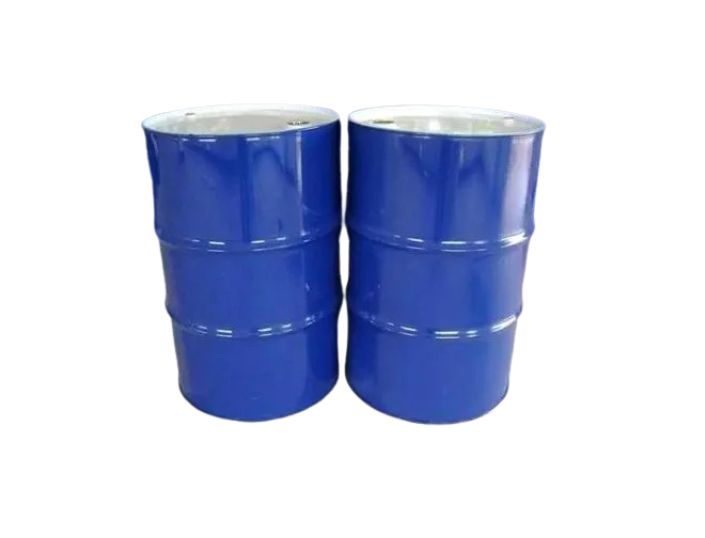
Drums: 200–250 kg, often with nitrogen blanketing.
Iso-containers: 1,000 kg capacity for bulk use.
Totes or tankers: For large-scale industrial users.
Applications of Methylene Diphenyl Diisocyanate (MDI)
Rigid PU Foams: Primary material for building insulation, refrigeration, and freezer panels.
Adhesives & Sealants: High-strength glues and weather-proof sealants.
Elastomers & CASE Products: Used in coatings (2K systems), automotive parts, and industrial molds.
Spray Foams: On-site insulation with rapid curing.
Prepolymers: With polyols to tailor flexibility, hardness, and cure time.
Industrial Coatings: Scratch-resistant and UV-stable coatings for floors and appliances.
Why Choose Shakti Chemicals?
Quality Assurance: ISO 9001-certified since 1983, Shakti Chemicals upholds stringent manufacturing standards.
Supply Commitment: Boasts robust domestic production and global export presence across the UAE, Southeast Asia, Africa, South America, and Australia.
Competitive Pricing & Relationships: Their optimized sourcing and logistics deliver cost-effective pricing with low supply chain risks.
Comprehensive Portfolio: Provides consistent quality on MDI and a variety of chemicals, making them a one-stop provider.
Customer-First Policies: Fast response, flexible packing sizes (drums, IBCs), technical support, and backup supply ensure reliable delivery.
Global Trader & Importer Network: Well-recognized as a dependable trader, dealer, importer, and distributor of MDI—with transaction experience on various platforms.
FAQs
What’s the difference between monomeric MDI and polymeric MDI?
Monomeric MDI is mainly 4,4’-MDI with minor isomers, while polymeric MDI (pMDI) is a mixture of oligomeric isocyanates (multiple phenyl units) with slightly lower NCO content.
Why is 4,4’-MDI more reactive than 2,2’ or 2,4’ isomers?
The para-substituted isocyanate groups face minimal steric hindrance, making them more reactive compared with sterically hindered ortho-substituted isomers.
What are the main hazards of handling MDI?
Acute hazards include respiratory sensitization, asthma induction, eye as well as skin irritation. Chronic inhalation exposure may lead to pulmonary impairments.
Is MDI carcinogenic?
The EPA asks them as MDI as Group D which is “not classifiable as to human carcinogenicity”.
How should spills be handled?
Spillages must be contained, collected with inert absorbents, and disposed of as hazardous waste. Avoid water contact; ventilate and only allow trained personnel for cleanup.
How stable is MDI in storage?
MDI is stable under sealed moisture-free conditions. Elevated temperatures or humidity can cause dimerization/polymerization.
Can MDI be shipped internationally?
Yes—MDI is transport-regulated due to its hazardous nature. Packaging as well as documentation must comply with IATA, IMDG, and local UN ADR regulations.
Which industries use MDI most?
PU insulation, coatings, adhesives, automotive, refrigeration, construction, and case manufacturing industries utilize MDI extensively.
How can product quality be verified?
Verification via NCO titration, viscosity measurements, isomer analysis, and moisture testing per specified ISO/ASTM methods.
Does cured polyurethane retain any MDI hazards?
Once fully cured (all –NCO reacted), MDI becomes part of an inert polymer network and poses no isocyanate hazard.
Methylene Diphenyl Diisocyanate (MDI) stands as a fundamental building block in modern polyurethane manufacturing. With its exceptional reactivity, versatile physical properties, and wide-ranging industrial applications—from rigid insulation foams to high-performance coatings—MDI underpins countless essential materials worldwide. exporter Suppliers like Shakti Chemicals in Mumbai, India, offer reliable, ISO-certified supply chains, competitive pricing, and technical support to meet stringent quality and safety standards. By understanding MDI’s structural nuances, handling procedures, and product specifications, engineers and procurement teams can leverage its full potential while maintaining operational excellence and regulatory compliance.
Get in Touch with Us
Looking for high-quality Methylene Diphenyl Diisocyanate (MDI)? Contact us today for bulk orders and technical details.
Contact Us- Address: 206-207, 2nd Floor, Wadala Udhyog Bhavan, Naigaon Cross Road, Wadala (West)
- Email: info@shaktichemicals.org
- Phone: +91 4044 0000