
N-Heptane Suppliers, Dealers in Mumbai, Maharashtra, India
N-Heptane – High Purity Solvent for Industrial Applications

N-Heptane is a straight-chain alkane hydrocarbon. It plays a significant part in multiple industrial applications. This is known for its low reactivity as well as excellent solvent properties. N-Heptane is widely used in laboratories, the pharmaceutical industry as well as the manufacturing of paints, coatings & adhesives. With its distinct chemical structure as well as high purity levels, N-Heptane serves as a standard for octane rating systems in fuels & is also valuable in organic synthesis. The substance’s favorable characteristics—such as a high boiling point & also non-polarity. This makes it essential in processes where controlled volatility as well as stability are needed.
What is N-Heptane?
This compound is also known as normal heptane or simply heptane. It is a saturated hydrocarbon with the formula of C₇H₁₆. This is an isomer of heptane. It also has a linear chain of seven carbon atoms fully saturated with hydrogen atoms. N-Heptane occurs naturally in crude oil. It is also typically isolated through fractional distillation. It appears as a clear or colorless liquid with a characteristic mild gasoline-like odor & is also highly flammable.
One of the renowned use of this compound is in the measurement of octane ratings in gasoline. It is used as the zero point reference in this scale to measure it. This is where N-Heptane is assigned an octane number of zero. This indicates its tendency to cause knocking in internal combustion engines. This thing helps calibrate fuel performance in various engines.
In the industrial sector, N-Heptane is broadly employed as a non-polar solvent due to its inertness as well as compatibility with a huge range of organic compounds. It is widely used in the formulation of adhesives, coatings as well as rubber cement. It is also used as a solvent in the extraction as well as purification of pharmaceuticals. In laboratories, it is often applied in chromatographic techniques as well as sample preparation due to its high purity & also minimal reactivity.
Its favorable evaporation rate, non-corrosive nature along with low toxicity in comparison to more aggressive organic solvents make it a preferred choice in sensitive environments. However, due care must still be taken in its handling, as N-Heptane is highly flammable and may cause irritation on contact or inhalation in poorly ventilated areas.
Product Description Table
| Property | Details |
|---|---|
| CAS Number | 142-82-5 |
| Appearance | Colorless liquid |
| Molecular Formula | C7H16 |
| Odor | Gasoline-like |
| Boiling Point | > 98.4°C |
| Molecular Weight | 100.20 g/mol |
| Flash Point | -4°C (closed cup) |
| Density | 0.684 g/cm³ at 20°C |
| Solubility in Water | Insoluble |
| Purity | ≥ 99% (varies by grade) |
Specifications
1. Purity Grade: This is available in high-purity grades (≥ 99%) for analytical as well as industrial use.
2. Evaporation Rate: This compound has moderate to fast evaporation rate. It is ideal for coating as well as cleaning applications.
3. Distillation Range: Narrow distillation range (typically between 97–100°C) ensures consistency in solvent behavior.
4. Non-Polar Nature: This product is excellent for dissolving hydrophobic substances as well as synthetic polymers.
5. Stability: This compound is chemically stable under normal conditions & also resistant to oxidation as well as acid degradation.
Handling and Storage
Proper handling as well as storage of N-Heptane are essential for maintaining safety in industrial and laboratory environments. Here are the best practices:
• Storage Conditions: Store N-Heptane in tightly sealed containers made from compatible materials such as stainless steel or HDPE. It should be kept in a cool, dry as well as well-airy area away from sources of ignition.
• Temperature Control: Try to avoid exposure to heat, sparks, or flames. Always use only with adequate ventilation as well as explosion-proof electrical equipment.
• Personal Protection: When handling N-Heptane, wear chemical-resistant gloves, shades & also protective clothing. Guarantee that eyewash stations as well as safety showers are readily accessible.
• Spill Response: In case of a spill always use inert absorbent materials. These materials are like sand or vermiculite. This will soak the chemical fast. Avoid release into the environment.
• Fire Hazard: As N-Heptane is highly burnable, keep it away from oxidizers a open flames. Use foam, dry chemical, or CO₂ extinguishers in case of fire.
Structure of N-Heptane
N-Heptane is a straight-chain alkane composed of seven carbon atoms and sixteen hydrogen atoms, forming the molecular formula C₇H₁₆. Its structure is:
CH₃–(CH₂)₅–CH₃
This linear arrangement gives it low polarity, making it an effective non-polar solvent. The molecule lacks any functional groups. This thing contributes to its stability as well as low reactivity. The absence of branching guarantees it has a lower octane rating than branched isomers like isoheptane.
Why Choose Shakti Chemicals?
Shakti Chemicals stands out as a known name among N-Heptane suppliers, exporter, traders, dealers, importers or distributors in the chemical industry in Mumbai, India. Here's why partnering with us guarantees quality along with reliability:
1. Immense Purity Assurance: We deliver premium quality N-Heptane with industry-standard purity of ≥99%. This purity is suitable for both industrial as well as laboratory applications.
2. Global Sourcing Network: As experienced importers or distributors, we procure N-Heptane from leading manufacturers globally to guarantee uniformity in supply & also quality.
3. Affordable Pricing: As a trusty dealer or trader, we provide affordable answers to your needs without compromising on quality.
4. Logistics Aid: We as a family help your well-established warehousing as well as logistics, Shakti Chemicals guarantees timely delivery across India as well as abroad. We provide goods on time.
5. Machinery Expertise: Our team of experts offers complete support on chemical specifications, safety data as well as compatibility. This makes us a preferred supplier for users across multiple sectors.
Product Pack Size
Shakti Chemicals in Maharashtra offers N-Heptane in a variety of packaging options to suit different industrial requirements:
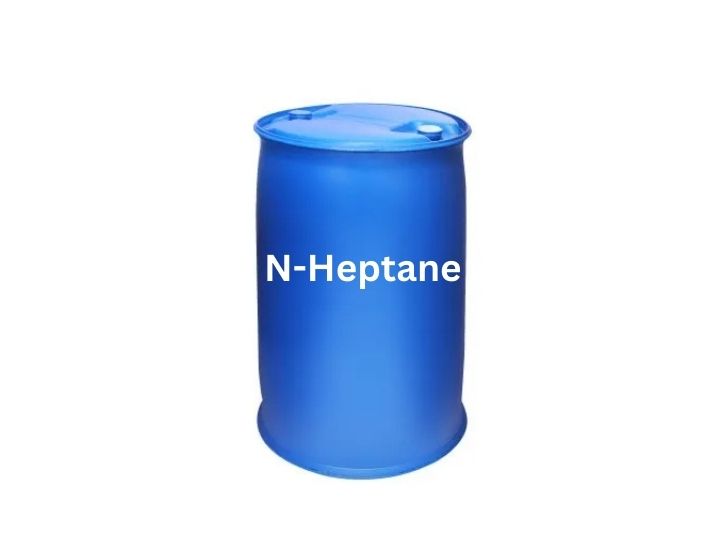
180 kg Drum
25 L HDPE Can
IBC Tanks (1000 L)
Custom bulk packaging available on request
All containers are compliant with international transport and storage standards and include proper labeling and Material Safety Data Sheets (MSDS) for safe handling.
Applications of N-Heptane
N-Heptane is an all-rounder solvent with applications across various industries as well as sectors:
1. Fuel Industry: This is used as a standard in octane rating as well as knock testing of gasoline.
2. Pharmaceuticals: It is used in extraction & also purification processes. All due to its low reactivity & selective solubility.
3. Paints and Coatings: This compound functions as a solvent as well as thinner in paints, adhesives & varnishes.
4. Rubber Industry: Utilized in rubber cement formulations and cleaning agents for elastomers.
5. Laboratories: This is commonly used as a solvent in chromatography, sample preparation as well as analytical research.
6. Adhesives: Ideal for non-polar adhesives & sealants requiring quick drying and strong bonding.
7. Textile Cleaning: Applied in specialized textile processes for residue removal and cleaning.
8. Plastic Manufacturing: Used as a carrier solvent as well as diluent in plasticizer as well as polymer production.
FAQs
1. What is the boiling point of N-Heptane?
The compound boils at approximately 98.4°C, which makes it suitable for controlled evaporation applications.
2. Is N-Heptane hazardous to health?
N-Heptane is burnable & can cause irritation if inhaled or upon skin contact. Always & always handle with proper protective tools & care.
3. Can N-Heptane be soluble with water?
No, N-Heptane is insoluble in water all because of its non-polar nature.
4. What are the common applications of this compound?
It is used in fuel testing, rubber cement, adhesives, paint coatings, pharmaceuticals as well as laboratory solvents.
5. Is this compound used in fuel analysis?
Absolutely yes as it is the reference point in octane rating systems. Here it is assigned a zero octane number.
6. How should N-Heptane be stored safely?
Store it in a cool, fully airy as well as flame-proof area in tightly sealed containers.
7. Does N-Heptane have isomers?
Yes, N-Heptane has several isomers. These isomers include isoheptane. This differs in structure as well as octane rating.
8. Is this compound reactive with acids or bases?
Absolutely not as it is relatively inert as well as does not react with dilute acids or bases under normal conditions.
9. What is the flash point of N-Heptane?
The flash point is approximately -4°C. This is what classifies it as a highly burnable liquid.
10. Can this be used in chromatography?
Yes, its non-polarity as well as purity make it ideal for gas chromatography & also other analytical methods.
This is a major component in industrial operations. This is used where high-purity & non-polar solvents are needed. Its unique properties include such as a low boiling point, inert nature, as well as excellent solvency. This all makes it an indispensable material in fuels, laboratories, adhesives & also pharmaceutical applications. When sourcing N-Heptane, it’s essential to choose a supplier that prioritizes quality, safety as well as user satisfaction.
Get in Touch with Us
Looking for high-purity N-Heptane at competitive pricing? Contact our sales team for bulk inquiries and customized packing options.
Contact Us- Address: 206-207, 2nd Floor, Wadala Udhyog Bhavan, Naigaon Cross Road, Wadala (West)
- Email: info@shaktichemicals.org
- Phone: +91 4044 0000