
Diethyl Malonate (DEM) Suppliers, Dealers in Mumbai, India
Diethyl Malonate (DEM) – High-Quality Intermediate for Agrochemical & Pharma Applications
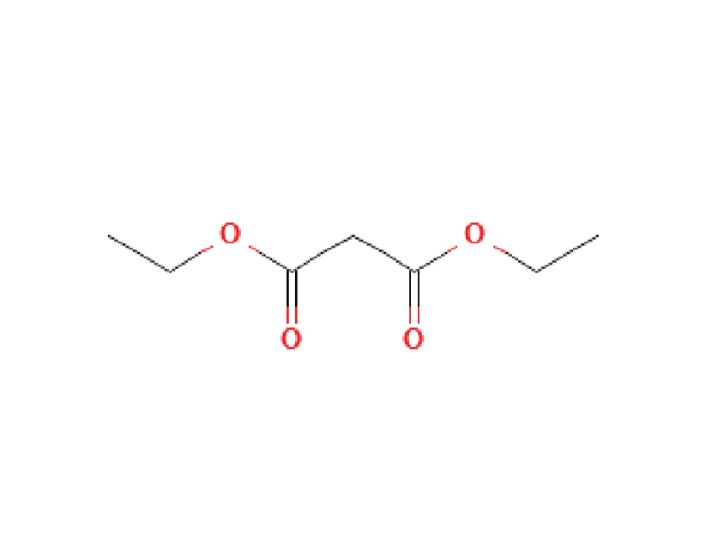
Diethyl malonate (DEM) is a versatile organic compound. It is widely utilized in the industry of chemicals. As a diester of malonic acid (C₇H₁₂O₄), it plays a fundamental role in pharmaceutical synthesis, agrochemicals, flavor as well as fragrance production & polymer chemistry. With two ester groups flanking a methylene unit, DEM serves as a critical reagent in carbon–carbon bond-forming reactions such as the malonic ester synthesis, Knoevenagel condensations as well as alkylations. Its relatively low cost, ease of handling & well-defined reactivity make it an indispensable building block for complex organic molecules
What is Diethyl Malonate (DEM)
Diethyl malonate is often abbreviated as DEM. It is a di-ester derived from malonic acid & is chemically denoted as C₇H₁₂O₄. Structurally, it consists of a central methylene group flanked by two ethoxycarbonyl moieties (–COOEt). This configuration grants DEM unique acidity at the methylene hydrogen atoms. This enables deprotonation by bases to form resonance-stabilized carbanions. These carbanions are ideal nucleophiles for alkylation as well as condensation reactions. This makes DEM a cornerstone reagent in the synthesis of barbiturates, vitamin B₁ analogs, heterocycles & substituted acetic acids.
Key characteristics of DEM include:
Versatility in C-C bond formulation: It allows malonic ester synthesis which facilitates the development of α substituted acetic acids.
Reagent in multi-step syntheses: This promotes a broad series of transformations (alkylation, cyclization, decarboxylation).
Best for medicinal chemistry: It is an important synthon for active pharmaceutical ingredients (APIs), agrochemical intermediates as well as flavor/fragrance compounds.
High purity & uniform quality: This is crucial for reproducible chemical processes.
DEM is mainly produced via esterification of malonic acid or malonyl chloride with ethanol under acidic conditions. The compound is purified using distillation & also drying processes to achieve high chemical purity (≥99%). This guarantees minimal side reactions & reliable results in downstream processes. Its physical form is a colorless to pale-yellow liquid (or low-melting crystalline solid. This depends on grade & refrigeration) with a moderate boiling point (~192 °C) & also moderate density. DEM is soluble in most organic solvents (ethanol, ethers, and hydrocarbons) and slightly soluble in water—enabling easy incorporation into diverse reaction media.
Chemical Specifications
| Property | Details |
|---|---|
| CAS Number | 105-53-3 |
| Chemical name | Diethyl malonate |
| Molecular Formula | C7H12O4 |
| Outer visibility | Colorless to pale-yellow liquid (it is low-melting solid) |
| Purity | ≥ 99.0% |
| Molecular Weight | 160.17 g/mol |
| Boiling point | Approx. 190–192 °C @ 760 mmHg |
| Density | ~1.06 g/cm³ @ 20 °C |
| Refractive index | ~1.407 @ 20 °C |
| Water solubility | Insoluble to slightly soluble (0.5–1%) |
| Flash point | ~85 °C (closed cup) |
| Storage condition | 2–8 °C (ref refrigeration), cool and dry area |
| Shelf life | ~12 months (sealed) |
Specifications
Water content: It is ≤0.1% by Karl Fischer titration
Acidity / Alkalinity: pH 5–7
Color (within APHA scale): ≤20
Peroxide value: Negligible – passes peroxides test
Heavy metal content: ≤10 ppm
Handling and Storage
Storage: Maintain in cool (2–8 °C), well-ventilated, fire-resistant storage areas.
Container material: Use tightly sealed glass or stainless-steel containers.
Segregation: Try to store away from strong oxidizers, heat sources as well as direct sunlight.
Shelf life: Typically 12 months; refrigeration prolongs stability, minimizing yellowing or peroxide formation.
Handling precautions: Wear chemical-resistant gloves, goggles, and protective clothing. Use in fume hoods due to vapors & mist.
Spill management: Try to absorb with inert material (e.g., vermiculite), collect in labeled containers & finish with decontamination or disposal per regulations.
Environmental protection: Avoid release to drains; manage under solvent disposal guidelines.
Structure of Diethyl Malonate (DEM)
The molecular structure of DEM can be shown as:
C₇H₁₂O₄
Key structural features:Central methylene group (–CH₂–): This is acidic due to conjugation with adjacent carbonyl groups & the pKa is ~13.3.
Ethoxycarbonyl moieties (–COOEt): Provide steric as well as electron-withdrawing effects.
Ester functionality: This enables typical ester chemistry (hydrolysis & transesterification).
Full symmetry as well as resonance stabilization: This supports formation of enolate/anionic species.
Why Choose Shakti Chemicals
Shakti Chemicals has made itself as one of the leading suppliers, traders, dealers, importers, exporters or distributors of Diethyl Malonate globally as well as in Mumbai. Here's you can see why:
- Consistent product quality: Advanced QC labs verify multi–point assays and impurity profiling.
- Competitive pricing: Long-term contracts with feedstock sources enable cost efficiencies.
- Global logistics network: Seamless shipping across India, Middle East, Europe, and Asia.
- Scalable buying: It is able to accommodate small R&D quantities to big tonne-scale sector needs.
- Made-to-order packaging: They ship in drums (25 kg, 200 kg) as well as IBCs as required.
- Technical help: It offers application consulting for synthetic procedures.
- Regulatory compliance: It complies to REACH, TSCA & other international regulations. It also provides safety data sheets.
- Sustainability efforts: Waste management as well as solvent recovery systems to diminish environmental impact.
Product Pack Size
Shakti Chemicals offers DEM in various pack sizes for R&D, pilot, and bulk users in India:
1 kg amber glass bottle – ideal for lab-scale research.
5 kg HDPE drum – suited to small pilot batches.
25 kg steel drum – widely used in mid-scale operations.
200 kg steel drum / IBC – for large-scale production customers.
Applications of Diethyl Malonate (DEM)
- Malonic Ester Synthesis Alkylation with alkyl halides → substituted malonates → decarboxylation to α-substituted acetic acids (e.g., acetoacetic acids and amino acids).
- Pharmaceutical Intermediates Synthesis of barbiturates, penicillin analogs, anti-inflammatory agents, vitamin B₁ models, and substituted pyridine/pyrimidine derivatives.
- Agrochemical Production Derivation of herbicides and insecticides via alkylated malonates and heterocyclic scaffolds.
- Flavor & Fragrance Chemicals Production of ester- and ketone-based aromatic compounds via Knoevenagel condensations and decarboxylation.
- Polymer Chemistry Monomer for alkylated polyacrylates; precursor to polyol cross-linkers via hydrolysis and reduction sequences.
- Heterocycle Synthesis Building block for dihydropyridines, barbiturates, and pyridine-2,4-diones via condensation with amines or carbonyl partners.
- Fine Chemical Intermediates Used in preparation of dyes, stabilizers, chelating agents, and high-value organic frameworks.
FAQs
What is the typical purity of Diethyl Malonate supplied?
Shakti’s standard grade DEM offers ≥99.0% purity verified by GC/HPLC.
How should DEM be stored?
Store between 2–8 °C in a dry, cool, ventilated area away from light and oxidizers.
Is DEM compatible with aqueous reactions?
It’s largely insoluble in water; requires organic solvent or phase-transfer conditions.
What safety precautions are needed when handling DEM?
Use PPE: goggles, gloves, apron; handle under fume hood; avoid ignition sources.
Can DEM be reused or recycled?
Spent DEM may be recovered via distillation if free from water and decomposition products.
What are typical end-products synthesized from DEM?
Includes α-alkylated carboxylic acids, barbiturates, herbicide intermediates, aromatic esters, heterocycles, and specialty monomers.
How long is the shelf life of DEM?
Typically ~12 months when sealed; refrigeration extends this duration.
Can DEM be shipped internationally?
Absolutely. Shakti facilitates export using IATA-compliant packaging suitable for air freight or ocean shipping.
What grades are available?
Laboratory grade, technical grade, reagent grade based on purity, residual solvents, and heavy metal thresholds.
What documentation is included with each shipment?
Safety Data Sheet (SDS), Certificate of Analysis (CoA), shipment invoice, packing list, and regulatory compliance certificates (e.g., REACH).
Diethyl malonate (DEM) is a foundational reagent in modern organic chemistry, offering unmatched flexibility in carbon–carbon bond formation, heterocycle construction, and pharmaceutical intermediate synthesis. With precise specifications, reliable packaging options, and rigorous quality control, Shakti Chemicals delivers high-purity DEM through its robust global distribution network. Catering to laboratories, pilot plants, and large-scale industrial users, Shakti's extensive experience as suppliers, traders, dealers, importers, and distributors—combined with technical support—ensures customers receive top-tier chemical performance and service. Whether you're developing complex drug molecules or agrochemical intermediates, DEM remains a smart choice for chemical synthesis workflows.
Get in Touch with Us
Looking to source high-quality Diethyl Malonate (DEM)? We supply bulk quantities across industries with consistent quality and on-time delivery.
Contact Us- Address: 206-207, 2nd Floor, Wadala Udhyog Bhavan, Naigaon Cross Road, Wadala (West)
- Email: info@shaktichemicals.org
- Phone: +91 4044 0000