
Neopentyl Glycol Suppliers, Dealers n Mumbai, India
Neopentyl Glycol – High-Performance Intermediate for Coatings & Resins
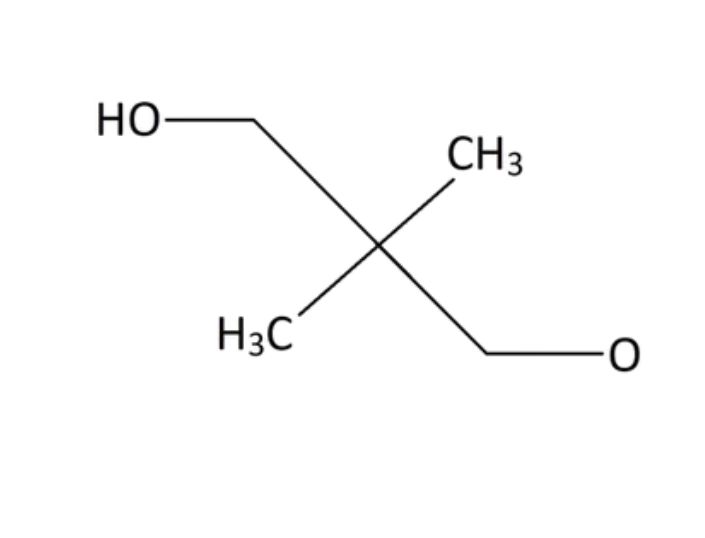
Neopentyl Glycol (NPG) is an all-rounder & aliphatic diol. This is widely used as a building block in high-performance polymers, coatings, plasticizers, lubricants as well as UV stabilizers. With its unique molecular structure, i.e., featuring two primary alcohol groups on a quaternary carbon, NPG confers thermal, hydrolytic as well as oxidative stability to end-products. Its ability to impart excellent flexibility, weather resistance as well as durability makes it indispensable in the manufacture of polyesters, alkyd resins & also synthetic lubricants. Leveraging decades of manufacturing experience, Shakti Chemicals supplies superior–grade NPG tailored or made for ordering industrial applications.
What is Neopentyl Glycol?
Neopentyl Glycol is systematically named as 2,2 dimethyl 1,3 propanediol (C₅H₁₂O₂). It is a saturated diol characterized by two hydroxyl (–OH) groups positioned on either end of a tertiary-branched propyl chain.
This leads to the general structure of:
HO–CH₂–C(CH₃)₂–CH₂–OH
The presence of dual primary alcohols as well as a central, sterically hindered quaternary carbon atom grants NPG exceptional resistance to chemical as well as thermal degradation. Unlike straight-chain diols, the tucked methyl substituents protect the spine. It contributes to superior hydrolytic stability, increased oxidative resilience as well as low volatility.
NPG is a white crystalline solid, with a melting point of ~128 °C and a boiling range of approximately 279–282 °C at 20 mmHg. It is miscible with many organic solvents (e.g. alcohols, glycols, ketones) but only sparingly soluble in water.
Its pronounced utility arises from these key attributes:
• Thermal & hydrolytic stability: It is ideal in high-temperature & also moisture-exposed applications.
• Low volatility & odorlessness: This increases performance in coatings & resins.
• Flexibility & toughness: This compound increases outdoor durability in polyesters as well as alkyds.
• UV and weather resistance: Integral to coatings used in automotive, industrial as well as architectural sectors.
Consequently, NPG serves as a fundamental feedstock in polyester polyols (for PU), alkyd resins, plasticizers as well as the synthesis of neopentyl glycol diglycidyl ether (NPGDE) for epoxy systems.
Product Description Table
| Property | Details |
|---|---|
| CAS Number | 126-30-7 |
| Appearance | White crystalline solid |
| Molecular Formula | C5H12O2 |
| Assay Purity | This is very high like ≥ 99.0 wt % |
| Moisture Content | ≤ 0.20 wt % |
| Molecular Weight | 104.15 g/mol |
| Acid Value (mg KOH/g) | ≤ 0.03 |
| Color (APHA) | ≤ 10 |
| Melting Point | ~128 °C |
| Boiling Point (vacuum) | 279–282 °C @ 20 mmHg |
| Refractive Index | ~1.448 @ 20 °C |
| Solubility | Slight in water; miscible in organic solvents |
Specifications
Assay Purity ≥ 99.0 %: Ensures minimal contamination for high-quality polymer and resin synthesis.
Moisture Content ≤ 0.20 %: Low water inhibits premature side reactions in condensation polymerizations.
Acid Value ≤ 0.03 mg KOH/g: This shows negligible free acids which then prevents catalyst deactivation as well as color instability.
Color (APHA ≤ 10): High optical clarity essential for transparent/resin systems.
Melting & Boiling Points: High melting point supports easy handling whereas well-defined boiling range facilitates efficient distillation as well as purification.
Refractive Index ~1.448: Confirms purity and refractive consistency across batches.
Handling and Storage
• Storage Conditions: Maintain in a cool, dry area at 15–30 °C away from direct sunlight and ignition sources.
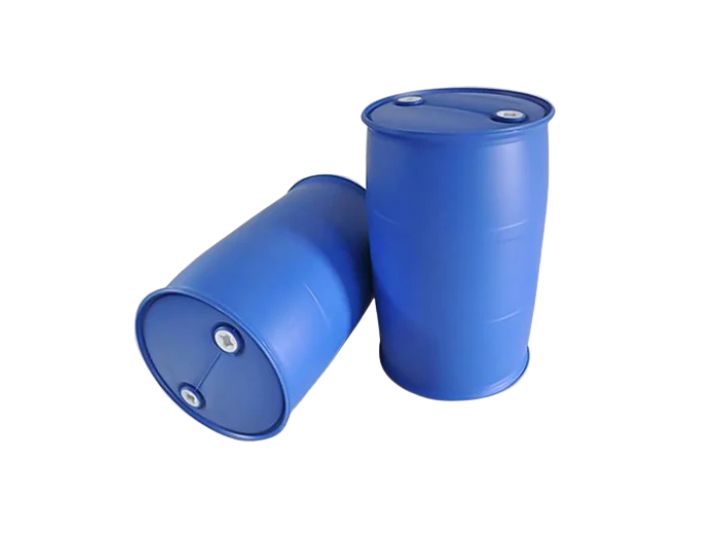
• Container Demands: Seal tightly in clean, corrosion-defiant containers of material HDPE, carbon–steel, stainless steel.
• Shelf Life: Minimum 12 months if stored properly & adequately.
• Spill & Leak Procedures:
o Avoid environmental discharge.
o Absorb with inert material (clay or vermiculite) as well as collect in sealed, labeled containers for disposal.
• Fire Hazards: Non-burning; however, in intense fire scenarios, carbon oxides may form. Always use carbon dioxide, foam, or dry chemicals to control fire in this case.
• Safety Gear:
o Wear chemical-resistant gloves, goggles/face shield, and protective clothing.
o Ensure adequate ventilation; if aerosolized, use appropriate respiratory protection.
• Waste Disposal: Follow local hazardous waste rules. Smallest quantities may be incinerated whereas larger volumes must be chemically neutralized.
Structure of Neopentyl Glycol
Neopentyl Glycol’s molecular structure can be visualized as:
C5H12O2
Quaternary carbon center: Provides steric protection against oxidation and hydrolysis.
• Two primary alcohol (–CH₂OH) groups: Highly reactive toward esterification, etherification as well as epoxidation.
• Symmetrical arrangement: It delivers uniform reactivity as well as processing behavior in polymer systems.
This unique geometric configuration distinguishes NPG from straight-chain glycols, enabling:
• Superior weather security
• Increased dimensional stability
• Improved mechanical performance in final polymer matrices
Why Choose Shakti Chemicals?
Robust Suppliers or exporter: Years of expertise in buying as well as delivering regularly high-grade Neopentyl Glycol to extensive industries or corporations.
Effective Traders: Great procurement along with logistics networks guarantee prompt delivery- even for specialty-grade NPG.
Worldwide Importers: Knowledgeable with complex customs, licensing as well as regulatory compliance. This guarantees seamless cross-border shipments.
Dedicated Distributors: Extensive distribution channels across India and international markets, serving downstream users in coatings, plastics, lubricants, adhesives, and more.
In addition, Shakti Chemicals in Mumbai, India offers:
Comprehensive technical support: Application engineering assistance, formulation insights, custom specifications.
Quality-driven management systems: Batch traceability, third-party testing, adherence with REACH, ISO & also other global standards.
Flexible packaging: Options from sample vials to custom-tailored bulk shipments.
| Packaging Type | Net Weight | Container Material |
|---|---|---|
| 25 kg drum | 25 kg | HDPE plastic w/ liner |
| 200 kg drum | 200 kg | Carbon steel, epoxy-lined |
| 500 kg IBC tote | 500 kg | Carbon steel, covered |
| 1 MT bulk | ~1 metric ton | ISO tankers / flexitanks |
Also available: Sample-sized bottles, trial packs, or customized packaging per customer requirements.
Accessory Services: On-site packaging, private labeling, Just-In-Time (JIT) logistics as well as MRP-managed replenishment.
Applications of Neopentyl Glycol
1. Polyester & Polyurethane Resins
• Forms the backbone of high-performance polyesters (e.g., PBT, PET) and polyester polyols for PU foams.
• Provides high Tg, low shrinkage, excellent tensile strength as well as thermal stability.
2. Alkyd & Acrylic Coatings
• Acts as a backbone in super-drying alkyd resins as well as long-oil/short-oil variants, delivering excellent brushability, gloss retention as well as weather-proof performance.
3. Plasticizers
• Combined with phthalates (e.g., DPHP) NPG creates low-odor & high-efficiency plasticizers for PVC film as well as sheet.
4. Lubricants & Hydraulic Fluids
• As a diol base, NPG allows polyol ester as well as polyol ether-based lubricants possessing high viscosity index, low pour point, high thermal stability for aviation, automotive & also industrial applications.
5. UV Stabilizers & Additives
• Reacts to form neopentyl glycol diglycidyl ether (NPGDE), a flexible, low-viscosity reactive diluent for epoxy coatings & also glues.
6. Specialty Intermediates
• Used to produce neopentyl glycol dinitrate (an energetic nitrate ester) for explosives, and neopentyl glycol bis(ω hydroxy fatty ether) stabilizers in PVC.
7. Plastic & Rubber Additives
• It serves as an ingredient in process aids, adhesion promoters, plasticizer coalescents as well as antistatic agents.
FAQs
1. What is the typical purity of Shakti’s Neopentyl Glycol?
≥ 99.0 wt % assay, with ≤ 0.2 % moisture and low acid/color levels.
2. How does NPG differ from butanediol or propanediol?
NPG has bulky methyl groups around its central carbon. This enhances oxidative/hydrolytic stability when compared to linear diols like 1,4 butanediol.
3. Is NPG safe for coatings as well as food-contact plasticizers?
With proper purification as well as residual control, NPG-based resins can be formulated to meet relevant food-contact regulations.
4. What are main endmarkets?
Coatings, polyesters, polyurethanes, plasticizers, lubricants, adhesives, sealants.
5. What safety data should be used?
Refer to its Safety Data Sheet (SDS) for full guidance on skin/eye protection and first-aid measures.
6. What packaging options are available?
From 25 kg drums, 200 kg drums, 500 kg IBC, to 1 MT bulk; made-to-order packaging also available.
7. How do I store it long-term?
Seal containers; store at 15–30 °C in a dry, ventilated area. Typical shelf life: 12 months.
8. Can I get samples?
Yes—Shakti Chemicals provides sample vials and trial bulk quantities upon request.
9. What analytical certifications are provided?
Certificate of Analysis available; testing includes GC, HPLC, FTIR, titration, moisture analysis.
10. How is shipping handled?
FG/UN designated packaging; rail, road, or sea freight with shipment traceability.
Neopentyl Glycol from Shakti Chemicals is a high-purity, industrial-grade diol meticulously crafted for high-performance polymer, coating as well as lubricant formulations. Its unique quaternary carbon structure offers superior thermal as well as hydrolytic resilience. It also offers low volatility & increased weather resistance. These are the key attributes for demanding application environments. Backed by strong logistics, technical expertise as well as flexible packaging, Shakti Chemicals in Maharashtra stands out as an ideal partner for suppliers, traders, dealers, importers, and distributors. Whether targeting advanced coatings, specialty polymers, or synthetic lubricants, their NPG ensures reliable performance and streamlined supply chain solutions.
Get in Touch with Us
Looking for high-quality Neopentyl Glycol? Contact us today for bulk orders and technical details.
Contact Us- Address: 206-207, 2nd Floor, Wadala Udhyog Bhavan, Naigaon Cross Road, Wadala (West)
- Email: info@shaktichemicals.org
- Phone: +91 4044 0000