
Ethylene Diamine (EDA) Suppliers, Dealers in Mumbai, India
Ethylene Diamine (EDA) – High-Purity Diamine for Industrial Applications
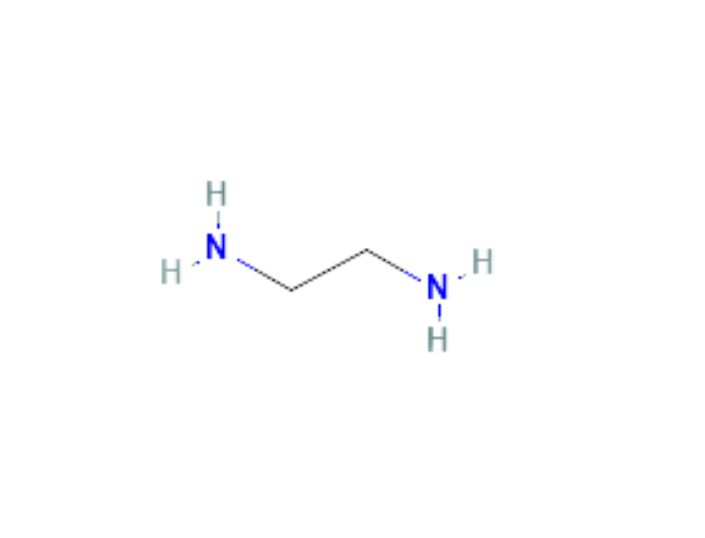
Ethylene Diamine (EDA) is a versatile aliphatic diamine. It is widely utilized in chemical industries as a building block for numerous downstream items. It is characterized by its strong nucleophilic & basic properties. EDA is integral in making chelating agents, pharmaceuticals, curing agents, textile auxiliaries as well as foam stabilizers. Its reactive primary amine groups make it highly useful for synthesizing heterocyclic compounds, surfactants as well as synthetic resins. Despite its reactivity, proper handling & also safe storage protocols guarantees its effective application. It has application across diverse sectors such as agrochemicals, flame retardants & coordinating ligands.
What is Ethylene Diamine (EDA)?
Ethylene Diamine (EDA) has the chemical formula C₂H₄(NH₂)₂. It is a colorless or yellowish & also hygroscopic liquid that exhibits a strong ammonia-like odor. Structurally, it has a two-carbon ethylene bridge flanked by two primary amine groups. This diamine is a potent base (pKa₁ ≈ 10.7, pKa₂ ≈ 6.8). It means it readily participates in acid–base reactions and nucleophilic substitution, making it valuable for synthesizing a broad array of chemical derivatives.
Chemically, EDA is employed for:
• Chelation and coordination: forming stable complexes with transition metals (Cu, Ni, Co), pivotal in water treatment, electroplating, and analytical reagents.
• Intermediate in organic synthesis: Helps in producing imidazoles, pyrazoles as well as other heterocycles. It is essential in pharmaceuticals and agrochemicals.
• Building block for adhesives & resins: reacting with epichlorohydrin to form epoxy curing agents, polyamide resins, and polyurethane systems.
• Amide & also urea production: Done via acylation & carbamoylation processes.
• Surfactant as well as textile auxiliary synthesis: It provides hydrophilic segments for emulsifiers & wetting agents.
Product Description Table
| Property | Details |
|---|---|
| Chemical Name | Ethane-1,2-diamine (1,2-Diaminoethane) |
| Appearance | Colorless to pale yellow hygroscopic liquid |
| Molecular Formula | C2H8N2 |
| Odor | Strong ammonia-like |
| Purity | ≥ 99.0 wt % (typical grade) |
| Molecular Weight | 60.10 g/mol |
| Water Content | ≤ 0.2 wt % ~ 0.5 % |
| Color (Pt-Co) | ≤ 10 |
| Boiling Point | ≤ 10 |
| Refractive Index (n²⁰ᴰ) | ~1.45 |
| Density | ~0.95 g/cm³ at 20 °C |
| pH (10 % aqueous) | ~11.5–12.5 |
| Flash Point | 48 °C (closed cup) |
| Viscosity | ~3 mPa·s at 20 °C |
| Flash Point | 48 °C (closed cup) |
| Storage Temperature | 15–30 °C (cool, dry, ventilated) |
| Shelf Life | 12 months (in sealed containers) |
Specifications
Purity and Impurities: Offered in standard industry grades (≥ 99.0 wt %) with analytical support data (GC, NMR, water content).
Moisture: Maintained at low levels (≤ 0.2 wt %) to prevent dilution or hydrolysis in reactive applications.
Color: Visually constrained to Pt Co ≤ 10. This guarantees minimal discoloration in sensitive syntheses.
Alkalinity: High pH aqueous solutions (≈ 12) affirm the basic nature and strong amine content.
Metal Traces: Trace metal (< 10 ppm) controls are present for peculiar optical or electronic applications.
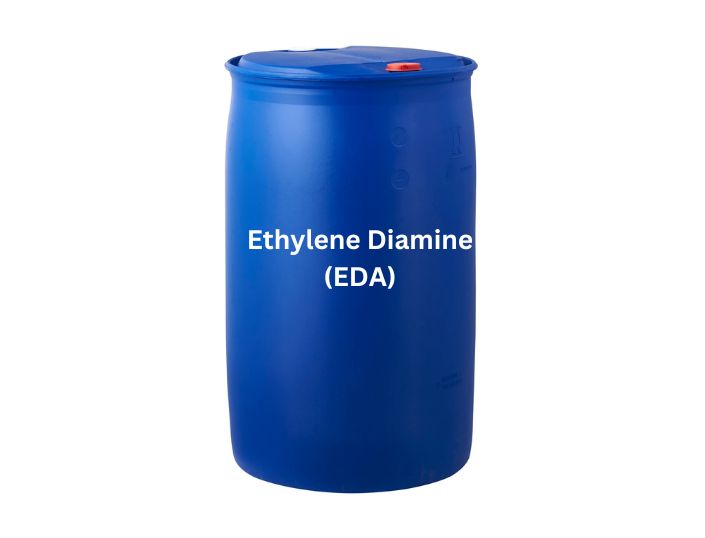
Handling and Storage
Working with EDA demands conscientious safety protocols:
1. Personal Protection
o Wear chemical-resistant gloves (nitrile or neoprene), full-face shield or goggles, and acid/organic vapor-compatible respirator when vapors exceed exposure limits.
o Long-sleeved clothing along with impervious protective covers reduce dermal contact risk.
2. Ventilation
o Conduct transfers & open containers within chemical fume hoods or local exhaust systems.
o Guarantee ambient air exchange rates comply with threshold limit values.
3. Fire/Explosion Hazards
o With a flash point of ~48 °C, EDA exhibits flammable vapors & also can form explosive mixtures. Eliminate ignition sources as well as use grounded, spark-free tools.
o Store away from oxidizers, peroxides, or strong acids to prevent exothermic reactions.
4. Storage Conditions
o Store in tightly sealed or vacuum packed, labeled HDPE or stainless steel containers resistant to amine corrosion.
o Maintain cool (15–30 °C), dry, well-ventilated storage; segregate from acids, halogens, nitrites, and isocyanates.
o Use secondary containment trays in case of leaks.
5. Spill Response
o Evacuate if vapors exceed safety thresholds. Control ignition sources & allow ventilation in that area.
o Neutralize minor spills with dilute acid (e.g., 10 % acetic acid) under fume hood, absorb with inert material, and dispose per environmental regulations.
6. Disposal
o Collect EDA waste in tightly sealed UN approved containers only as it can leak.
o Neutralize residuals before treating via industrial waste systems in terms with local regulations.
Structure of Ethylene Diamine (EDA)
EDA’s structure highlights its reactive attributes:
H₂N—CH₂—CH₂—NH₂
Primary amine groups (–NH₂): Ultrareactive functional groups capable of participating in basic reactions, nucleophilic attacks, and coordination chemistry.
Ethylene linkage (–CH₂–CH₂–): Provides molecular flexibility which allows intramolecular cyclizations & also reactivity in heterocyclic synthesis.
Hydrogen bonding: Greatly contributes to EDA's hygroscopic nature as well as solvation behavior in diverse solvents.
Coordination ability: Acts as a bidentate ligand, forming chelate rings (~5-membered) instrumental in metal complexation applications.
Why Choose Shakti Chemicals
Shakti Chemicals stands out as a trusty partner for sourcing high quality Ethylene Diamine across global markets as well as in Mumbai, Maharashtra. The reasons include:
• Global Distributors Network: Long standing collaborations with leading EDA manufacturers guarantee stable raw material channeling.
• Experienced Exporters & Dealers: Skilled in logistics, customs regulations as well as export documentation—facilitating seamless cross-border supply.
• Certified Importers: Navigate import licensing, duty optimization, and tariff classification to protect customer interests.
• Strategic Distributors: Local warehousing and last-mile distribution ensure just-in-time delivery to industrial clients.
• Consistent Quality: Offering ≥ 99.0 wt % EDA with full-spectrum documentation like COA, MSDS, purity analysis & for regulated sectors.
• Technical Support: Backed by in house chemists providing formulation advice, troubleshooting, and regulatory guidance.
• Flexible Packaging: Provision of Drums (200 kg), IBCs (1,000 kg), and Guide to customer regulatory compliance and labeling per IMDG, ADR, and local norms.
These competencies make Shakti Chemicals a one stop solution for procurement, regulatory compliance, distribution & also buyer support across sectors.
Product Pack Size
Ethylene Diamine is available in standardized industrial packaging:
200 kg HDPE-lined steel drums
1,000 kg IBC totes (HDPE/steel constitution)
Bulk options via ISO tankers or dedicated containerization—ideal for large-volume users
Custom pack sizes available on request, subject to MOQ agreements and special handling protocols
Each pack is labeled per GHS, IMDG, and ADR standards, accompanied by COA, MSDS, and transportation documentation.
Applications of Ethylene Diamine (EDA)
EDA’s versatility allows its deployment across a huge spectrum of industries:
1. Epoxy Curing Agents & Resins
– Reacts with epichlorohydrin to form Diglycidyl ethers. This leads to robust & good curing agents in coatings, adhesives as well as composites.
2. Chelating Agents & Metal Complexes
– Precursor to ethylenediaminetetraacetic acid (EDTA) & also similar compounds. It is broadly used in water conditioning, detergents, pulp bleaching as well as analytical chemistry.
3. Pharmaceutical Intermediates
– Employed in synthesis of imidazoles, pyrazoles, and imines. It is used in APIs for hypertension, anticancer, and cardiovascular drugs.
4. Textile & Leather Auxiliaries
– Functions in softeners as well as dyeing processes. It acts as a pH regulator as well as wetting agent.
5. Surfactants & Emulsifiers
– This serves as backbone for fatty amidoamine synthesis, yielding foam stabilizers as well as dispersants.
6. Agrochemical Products
– Intermediates for herbicide & also pesticide formulations offering improved solubility as well as biological activity.
7. Gas Treatment & Oil & Gas
– It reacts with H₂S & CO₂ in gas-sweetening solvents, employed in amine-based purification units.
8. Polyurethane Chain Extenders
– Provides cross linking sites in PU elastomers, coatings along with adhesives.
9. Flame Retardants
– Derivatives used with phosphates as well as melamines to create flame-inhibited polymer systems.
10. Analytical & Laboratory Reagents
– It is used in titrations, buffer systems, pH stabilization & also metal complexation due to its predictable reactivity.
Frequently Asked Questions (FAQs)
1. Is Ethylene Diamine (EDA) toxic or hazardous?
Yes, EDA is a corrosive material & can cause skin, eye as well as respiratory irritation rapidly. Use PPE and ensure adequate ventilation.
2. What is the standard concentration of EDA?
The commercial grades typically offer ≥ 99.0 wt % purity with ≤ 0.2 wt % water content.
3. How stable is EDA during storage?
Under pre-described conditions, i.e, sealed, 15–30 °C, EDA is stable for up to 12 months.
4. What materials are compatible for storage and transfer?
Always use HDPE, stainless steel as well as glass-lined carbon steel. Avoid copper, brass & also aluminum alloys susceptible to amine attack.
5. Can EDA be transported by sea or road?
Yes—it’s regulated under UN 2348 as a flammable liquid and requires GHS, ADR/IMDG, and IATA-compliant packaging.
6. Can EDA be used directly in polyurethane foam systems?
It is formally employed as a chain extender or curing agent. It's compatibility depends on overall formulation.
7. Does EDA react with acids?
It reacts strongly. It forms ammonium salts as well as releasing heat; handle with appropriate controls.
8. How should I neutralize spills?
Use dilute acetic or citric acid while ventilating and wearing PPE, then absorb and dispose of residues per regulations.
9. Is there a food- or pharma-grade EDA available?
Yes—ultra high purity (≥ 99.9 %) pharmaceutical or GMP grade is available for regulatory applications.
Ethylene Diamine (EDA) is a highly reactive & strategically significant diamine with extensive industrial relevance. It serves as a precursor for chelating agents, curing systems, pharmaceuticals, agrochemicals, surfactants as well as analytical reagents. Its double amine functionality paired with two-carbon flexibility yields strong nucleophilicity as well as coordination behavior. This acts as a very important factor. This drives efficiency in humongous manufacturing industries. However, its volatility, corrosivity as well as flammability starts rigorous safety & also storage protocols.
Get in Touch with Us
Looking for a trusted supplier of Ethylene Diamine (EDA)? Contact us today for bulk inquiries, specifications, and samples.
Contact Us- Address: 206-207, 2nd Floor, Wadala Udhyog Bhavan, Naigaon Cross Road, Wadala (West)
- Email: info@shaktichemicals.org
- Phone: +91 4044 0000