
Ammonium Thiocyanate (ATC) Suppliers, Dealers in Mumbai, Maharashtra, India
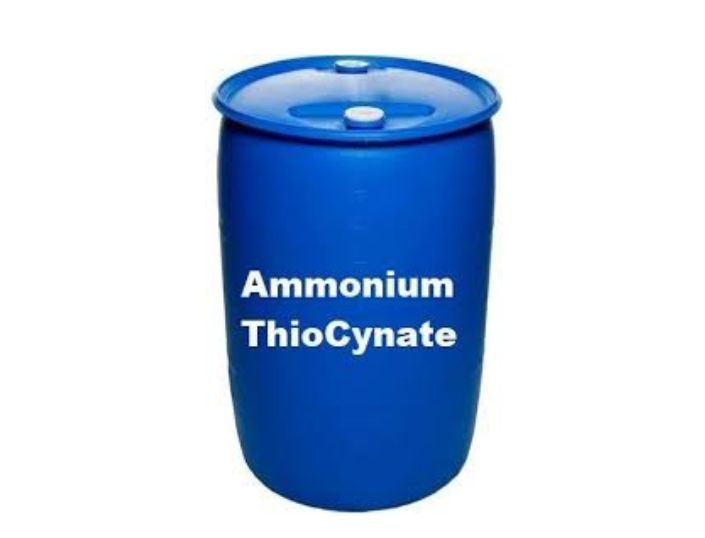
Ammonium Thiocyanate (ATC)

Ammonium Thiocyanate (ATC) is chemically represented as NH₄SCN. Its abbreviated name is ATC. It is a versatile inorganic compound. This compound is generously used across numerous industries. All these industries are chemical manufacturing, photography, textiles as well as metallurgy. Its peculiar chemical properties, such as high solubility in water & ability to form complexes with metal ions, make it invaluable in numerous applications. This thorough overview delves into the characteristics, specifications, handling guidelines, structural details & also applications of ATC. It provides acumen into its significance in industrial as well as laboratory settings.
What is Ammonium Thiocyanate (ATC)?
Ammonium Thiocyanate is an inorganic salt formed by the combination of the ammonium ion (NH₄⁺) as well as the thiocyanate ion (SCN⁻). It appears as a colorless crystalline solid & is highly soluble in water, alcohol, acetone & ammonia. This compound is made through the reaction of carbon disulfide with aqueous ammonia in lab. This then results in the processing or making of ammonium thiocyanate.
It's chemical structure allows it to act as a ligand. It forms complexes with multiple metal ions. This characteristic is particularly useful in analytical chemistry as well as metallurgy. Its solubility & reactivity make it apt for applications such as textile dyeing & printing. This is where it serves as a dyeing assistant & in photography, where it functions as a stabilizing agent.
In the chemical industry, ATC is employed in the synthesis of herbicides, rustproofing agents, and as a curing agent for resins and adhesives. Its role in electroplating processes is notable, where it helps in the deposition of metals onto surfaces.
Despite it’s such huge use, handling ATC needs caution due to its potential environmental hazards. It should not be released into the environment & also appropriate preventive measures must be taken to prevent contamination of water bodies.
Product Description Table
| Property | Details |
|---|---|
| CAS Number | 1762-95-4 |
| Chemical Name | Ammonium Thiocyanate |
| Molecular Formula | NH4SCN |
| Appearance | Colorless crystalline solid |
| EC Number | >217-175-6 |
| Molecular Weight | 76.12 g/mol |
| Solubility | Highly soluble in water, alcohol, acetone, and ammonia |
| Melting Point | 152–154°C |
| Boiling Point | 262.85°C |
| Density | 11.3 g/cm³ |
| pH (50g/L solution) | 4.5–6.0 |
| Storage Conditions | Store in a arid, cool, well-airy place. Also protect from light & moisture |
Technical Specifications
| Parameter | Specification |
|---|---|
| Purity | ≥98% |
| Moisture Content | ≤1.0% |
| Chloride (Cl⁻) | ≤0.02% |
| Sulfate (SO₄²⁻) | ≤0.02% |
| Iron (Fe) | >≤0.003% |
| Heavy Metals (Pb) | ≤0.002% |
| Insoluble Matter | ≤0.02% |
| Ignition Residue | ≤0.01% |
Handling and Storage
Handling:
Use personal protective equipment. this includes gloves, safety shades as well as lab coats.
Avoid inhalation of dust. Always use in a well-airy area or under a chemical fume hood.
Prevent contact with eyes, skin & any part of the body or clothing.
Do not ingest it (even accidently). If swallowed, seek asap medical help.
Storage:
Store in seal-packed closed containers in a cool, arid as well as well-ventilated area.
Keep away from acids, peroxides as well as moisture.
Protect from light to prevent decomposition.
Ensure that storage areas are equipped with appropriate spill containment measures.
Structure of Ammonium Thiocyanate (ATC)
Ammonium thiocyanate is inclusive of the ammonium cation (NH₄⁺) as well as the thiocyanate anion (SCN⁻). The thiocyanate ion is a linear molecule with a resonance structure that gives access for delocalization of electrons between the sulfur, carbon & nitrogen atoms. This delocalization contributes to the stability of the ion & also its capability to form complexes with metal ions, which is exploited in various analytical & industrial applications.
Why Choose Shakti Chemicals
Shakti Chemicals is a premier supplier, trader, dealer, exporter, importer or distributor of high-quality compounds in Mumbai, India. Our dedication to excellence guarantees that users receive products that meet stringent quality standards, supported by comprehensive technical documentation & fast user service. With a strong supply chain & a focus on user satisfaction, Shakti Chemicals is your reliable partner in Maharashtra for sourcing ATC for diverse industrial as well as laboratory needs.
Product Pack Size
Shakti Chemicals offers Ammonium Thiocyanate in various pack sizes to cater to different customer requirements. Available packaging includes 50g, 100g, 250g, 500g, and 1000g options, ensuring flexibility for both small-scale laboratory use and large-scale industrial applications.
Applications of Ammonium Thiocyanate (ATC)
Ammonium Thiocyanate is a highly functional chemical compound, extensively utilized in various industrial and scientific domains. Thanks to its reactivity and solubility, ATC serves multiple roles in processes ranging from metallurgy to agriculture.
1. Photographic Industry
Ammonium Thiocyanate is employed as a stabilizer & also complexing agent in photographic emulsions. It helps in the development as well as stabilization of silver halide films, improving image clarity and longevity.
2. Textile and Dyeing Industry
In textiles, ATC functions as a dyeing assistant. It enhances the uptake of dyes onto fibers, especially in complex printing processes like vat and sulfur dyeing, contributing to color uniformity and brightness.
3. Chemical Synthesis
ATC is a vital intermediate in the synthesis of various organic and inorganic compounds, such as thiourea, herbicides, and catalysts. It is also used to introduce the thiocyanate group into organic molecules.
4. Electroplating and Metallurgy
Used in electroplating baths, ATC aids in the uniform deposition of metals such as gold and silver onto surfaces. It helps maintain bath stability and improves the quality of plated finishes.
5. Corrosion Inhibition
It serves as a component in formulations for rustproofing and corrosion inhibition, particularly in water-circulating systems and pipeline protection fluids.
6. Polymer Industry
ATC acts as a curing agent in epoxy and resin systems. It promotes crosslinking in polymerization reactions, improving the mechanical strength and thermal stability of cured products.
7. Analytical Chemistry
Due to its ability to form stable complexes with metal ions, ATC is widely used in colorimetric and volumetric analysis. For example, it reacts with iron(III) ions to produce a red-colored complex used in quantitative analysis.
8. Oil and Gas Industry
It is used as a demulsifier and dispersing agent during drilling operations and helps manage sludge and emulsion in crude oil processing.
9. Agriculture
In agrochemical formulations, ATC stabilizes herbicidal compounds and extends their shelf life, enhancing their effectiveness in pest and weed control.
10. Laboratory Reagent
Ammonium Thiocyanate is frequently employed in laboratories for preparing standard solutions, reagent mixes, and conducting experiments related to coordination chemistry.
FAQs
1. What is the primary use of Ammonium Thiocyanate?
ATC is primarily used in the chemical industry for synthesizing herbicides, in photography as a stabilizing agent, and in textiles for dyeing and printing processes.
2. Is Ammonium Thiocyanate hazardous?
Yes, it poses environmental hazards and should not be released into the environment. Proper handling as well as disposal procedures must be followed.
3. How should ATC be stored?
Store in a cool, dry, well-ventilated area, away from acids and moisture, and protect from light.
4. Can ATC be used in electroplating?
Yes, it is used in electroplating processes to aid in metal deposition.
5. What precautions should be taken while handling ATC?
Use appropriate personal protective equipment, avoid inhalation and contact with skin or eyes, and handle under a chemical fume hood.
6. Is ATC soluble in water?
Yes, it is highly soluble in water, with a solubility of approximately 163 g per 100 mL at 20°C.
7. What is the molecular weight of Ammonium Thiocyanate?
The molecular weight is 76.12 g/mol
8. Does ATC have any applications in agriculture?
Yes, it is used to stabilize various herbicides in the agrochemical industry
9. What is the pH of an ATC solution?
A 50g/L solution of ATC has a pH range of 4.5–6.0
10. Is ATC used in analytical chemistry?
Yes, due to its ability to form complexes with metal ions, it is used in various analytical chemistry applications .
Conclusion
Ammonium Thiocyanate (ATC) is a chemically dynamic compound with wide-ranging applications across industrial, agricultural, and research sectors. Its solubility, complexation ability, and reactive properties make it indispensable in chemical synthesis, metallurgy, textiles, and more. However, its use requires adherence to strict safety and environmental protocols due to its potential hazards. For industries and laboratories seeking a reliable source of ATC, Shakti Chemicals stands as a trusted supplier, trader, dealer, importer, and distributor offering top-grade Ammonium Thiocyanate backed by technical expertise and excellent service. Whether you're in need of small laboratory quantities or bulk industrial volumes, partnering with Shakti Chemicals ensures quality, consistency, and compliance.
Get in Touch with Us
Looking for high-quality Ammonium Thiocyanate (ATC)? Contact us today for bulk orders and technical details.
Contact Us- Address: 206-207, 2nd Floor, Wadala Udhyog Bhavan, Naigaon Cross Road, Wadala (West)
- Email: info@shaktichemicals.org
- Phone: +91 4044 0000