
Dimethyl Acetamide (DMAC) Suppliers in Mumbai, India
Dimethyl Acetamide (DMAC) – High-Purity Solvent for Industrial Applications
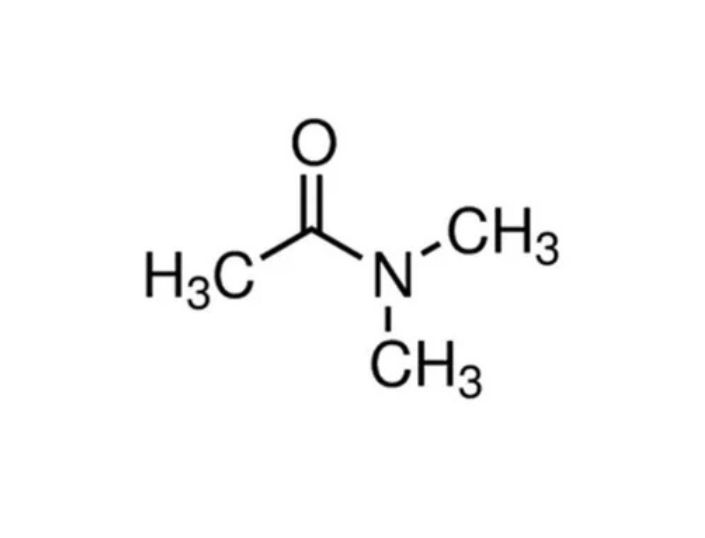
Dimethyl acetamide is also known as N,N dimethylacetamide. It’s an all-rounder, polar aprotic solvent widely used in pharmaceuticals, polymer processing & chemical synthesis. Due to its excellent solvency for a variety of polymers—including polyacrylonitrile, polyvinyl chloride, and polyurethane—DMAC is a preferred solvent in membrane manufacturing, fiber spinning, and coatings applications. Its high boiling point, chemical stability as well as low reactivity with most functional groups make it a fundamental component in industrial formulations. However, careful handling is needed due to its potential health hazards.
What is Dimethyl Acetamide (DMAC)?
Dimethyl acetamide has a chemical formula C₄H₉NO & CAS number 127 19 5. It is an organic chemical part of the amide family. As a polar, aprotic solvent, DMAC exhibits a high dielectric constant (~37 at 20 °C). It also has a relatively high boiling point (165 °C) which makes it suitable for a wide range of dissolution as well as reaction processes where water or alcohol-based solvents may fail.
It is commonly made through the acetic acid & also dimethylamine method or by methylating acetamide. The result is a colorless or pale yellow, hygroscopic along with water-miscible liquid with a faint amide odor. Possessing a flash point of 58 °C (closed cup), DMAC can be flammable under the right conditions, though it is classified as a Category 2 solvent by the US FDA for pharmaceutical applications due to its controlled residual process use.
DMAC is often compared to many other polar aprotic solvents like dimethylformamide (DMF) or N methylpyrrolidone (NMP). It offers the same solvency performance but with a lesser thermal stability. This makes it apt for high-degrees polymer processes. It dissolves a broad array of compounds. It ranges from cellulose derivatives as well as polyamides to specialty resins & also dyes, while facilitating high-viscosity reaction media. Given its favorable solvency, thermal stability, & also process compatibility, DMAC remains a cornerstone solvent in specialized chemical manufacturing.
Chemical Specifications
| Property | Details |
|---|---|
| CAS Number | 127-19-5 |
| Chemical Name | N,N-Dimethylacetamide |
| Molecular Formula | C4H9NO |
| Physical Look | Colourless to pale yellow as well as hygroscopic liquid |
| Odor | > Slight amide odor |
| Boiling Point | ~165 °C |
| Melting Point | −20 °C |
| Flash Point | 58 °C (closed cup) |
| Density (20 °C) | ~0.937 g/cm³ |
| Refractive Index (20 °C) | ~1.430 |
| Water Solubility | Miscible |
| Dielectric Constant | ~37 (20 °C)) |
| Viscosity (25 °C) | ~1.9 mPa·s |
| Food/Pharma Grade | Acceptable by US FDA as a Class 2 solvent for residuals |
Specifications
Purity: ≥99.5% (GC)
Water Content: ≤0.1% (Karl Fischer)
Acidity (as AcH): ≤0.001% w/w
Chloride (as Cl⁻): ≤0.001% w/w
Heavy Metals (as Pb): ≤2 ppm
Iron (Fe): ≤1 ppm
V Absorbance (260 nm): ≤0.05 AU/cm
Color (APHA): ≤10
These exacting specifications guarantee DMAC’s compatibility with high-purity processes like pharmaceutical dissolution, polymer formation, and electronic materials.
Handling and Storage
Storage Conditions: Store in airtight, corrosion-defiant containers (e.g. stainless steel, HDPE, glass) in a cool (≤30 °C), arid area which is away from ignition sources.
Ventilation: Use under local exhaust ventilation to minimize inhalation. Avoid aerosol generation.
Personal Protective Equipment (PPE): Wear chemical-defiant gloves (e.g. nitrile), shades or face shield, lab coat/lab suit as well as respirator if vapor concentrations exceed occupational exposure limits.
Spill Control: Absorb small spills with inert media (e.g. vermiculite), then dispose of as hazardous waste. Provide airy area. In case of large spills leave & also contact emergency services.
Fire Safety: Although moderately flammable, DMAC can release toxic fumes like CO, CO₂, NO₂ while burning. Use CO₂, dry powder & foam extinguishers & try to avoid water jets.
Stability & also Reactivity: Stable under normal conditions. It is incompatible with strong oxidizers (e.g. nitric acid, hydrogen peroxide). This may form corrosive nitrogen oxides under extreme heat.
Structure of Dimethyl Acetamide (DMAC)
DMAC features an amide functional group and two methyl substitutions on the amine nitrogen:C4H9NO
Amide Group (–CON–): Responsible for high polarity and hydrogen-bond acceptance.
Dimethylamino Group [N(CH₃)₂]: Increases solubility in organic media as well as contributes steric hindrance, reducing reactivity.
Bond Characteristics:
C=O double bond length ~1.23 Å.
N–C & also N–CH₃ bond angles support planar geometry.
The delocalization between the C=O and N lone pair reduces basicity and increases solvent stability.
This structure explains its strong solvency power, low chemical reactivity & also suitability for thermal processes.
Why Choose Shakti Chemicals
When sourcing DMAC, choosing the right supplier is as important as the chemical’s quality itself. Here’s why Shakti Chemicals stands out among suppliers, traders, dealers, importers or distributors:
• Global Sourcing & Logistics: As established suppliers and traders, we maintain direct import channels from manufacturing hubs, ensuring timely delivery.
• ISO-Compliant Quality Systems: Our DMAC is tested to meet ISO 9001 & also ISO 14001 standards. It guarantees consistency as well as traceability.
• Large-Scale Dealers & Distributors: With bulk stocking & regional warehousing, we supply any quantity—industrial drums to railway tanker loads with fast dispatch.
• Market Reach as Importers: Our import licenses as well as bonded facilities make us reliable for both export & domestic sourcing.
• Great Support: Our knowledgeable staff can advise on compatibility, handling protocols as well as regulatory adherence.
• Competitive Pricing: Thanks to our dealer network & also strategic freight collaborations, we can offer attractive rates along with flexible payment options.
Choosing Shakti Chemicals in India guarantees a reliable supply chain, high-purity DMAC & also full support from procurement through to regulatory documentation.
Product Pack Size
Shakti Chemicals in Mumbai, Maharashtra gives DMAC in multiple pack sizes to suit diverse industrial needs:
1 Litre amber glass bottles – for laboratory R&D use
5 Litre HDPE cans – for pilot-scale or small batch processes
25/30 Litre steel drums – for medium-scale production
200 Litre (210 kg) steel drums – huge bulk quantities & stored in warehouse
IBC totes (750–1,000 L) – for continuous processing
Rail/road tanker load – for large-scale, direct-fed polymer plants
All packagings meet UN/DOT regulations. Custom packaging or smaller trial sizes are available on request.
Applications of Dimethyl Acetamide (DMAC)
DMAC’s all-rounder nature makes it a key ingredient across several industries:
Polymer Processing
o Solvent for polyurethane (PU), polyacrylonitrile (PAN) as well as polyvinyl chloride (PVC) in fiber spinning, coatings, and films.
o Precursor for semipermeable membranes in pharmaceutical filtration & also water treatment.
Pharmaceutical Industry
o Used for API crystallization as well as drug formulation due to its Class 2 residual solvent profile.
o Excipient in drug dissolution testing and peptide synthesis protocols.
Chemical Synthesis
o Reaction medium in Friedel–Crafts, Grignard & also cyanation reactions.
o Solvent in lithium-ion battery electrode processing.
Coatings & Adhesives
o Formulation solvent for high-solids lacquers, anti-corrosive paints as well as adhesives.
Electronics & Fibers
o Solvent in photolithography, PCB manufacturing, and high-performance acrylic fiber production.
Analytical & Lab Uses
o Analytical reagent & also mobile phase in HPLC and UV analytical methods.
FAQs
Is DMAC water soluble?
Yes—fully miscible with water and many polar organic solvents.
How to remove DMAC from polymer blends?
Always use vacuum drying or heating below decomposition temperature; water washing also helps.
Can DMAC be recycled?
Yes it is typically distilled under vacuum with inert gas blanketing to prevent contamination.
Is DMAC flammable?
It has a closed cup flash point of ~58 °C, so proper bulk storage fire safety measures are needed.
Can DMAC penetrate rubber gloves?
Yes, always use gloves rated for solvents (e.g. Viton, butyl rubber) to prevent degradation.
What is the melting point of DMAC?
Approximately it is 20 °C which is apt for low temperature processing.
Can DMAC be used in pharmaceutical formulations?
It is acceptable as a Class 2 residual solvent always when controlled to ≤880 ppm.
Any compatibility issues with metals or plastics?
Typically inert to steel as well as aluminium. It may swell certain plastics (e.g. polystyrene), so select compatible storage materials.
How does DMAC compare to DMF or NMP?
DMAC offers higher thermal stability & also slightly better solvency for specific polymers. This makes it superior in high-temperature use.
What occupational limits apply?
OSHA/ACGIH TLV: 10 ppm (TWA). Formal exposure controls as well as monitoring are recommended in industrial settings.
Dimethyl acetamide is a powerful polar aprotic solvent with outstanding thermal as well as solvency characteristics. This makes it non-negotiable in polymer procedure, pharmaceutical synthesis & also specialty coatings. With high purity, robust supply chains & also compliant regulatory documentation, Shakti Chemicals in Mumbai stands out among suppliers, exporters, importers or distributors able to meet extensive industrial needs. From lab-sized glass bottles to bulk IBC as well as tanker volumes. This is available with strict specifications, reliable delivery as well as full tech help. While handling caution is needed due to its moderate toxicity & also flammability. So, DMAC remains a core solvent for advanced industrial applications.
Order Now
Contact us for bulk orders, samples, and technical documents for Dimethyl Acetamide (DMAC).
Contact Us- Address: 206-207, 2nd Floor, Wadala Udhyog Bhavan, Naigaon Cross Road, Wadala (West)
- Email: info@shaktichemicals.org
- Phone: +91 4044 0000