
Methyl Cyclohexane Suppliers, Dealers in Mumbai, India
Methyl Cyclohexane – High Purity Aliphatic Hydrocarbon Solvent
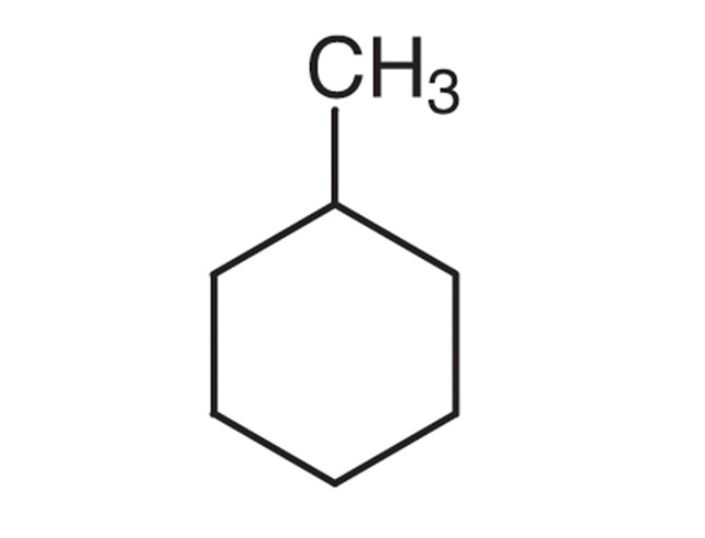
Methyl cyclohexane (MCH) is a colorless & also a flammable liquid. It is distinguished by its distinct aromatic undertone as well as usage across numerous industrial sectors. As a saturated cyclic hydrocarbon, MCH finds applications ranging from solvents in laboratory & also industrial settings to intermediates in organic synthesis. Its chemical stability, non-polarity, and compatibility with a variety of organic substances make it a versatile and valuable compound. The following sections offer an in-depth overview—from its chemical identity and handling requirements to technical specifications, packaging formats, and frequently asked questions—highlighting why Shakti Chemicals stands out as a trusted provider among exporter, suppliers, traders, dealers, importers, and distributors.
What is Methyl Cyclohexane?
Methyl cyclohexane (C₇H₁₄) is a saturated hydrocarbon. This belongs to the cycloalkane family. Structurally, it is a cyclohexane ring with one hydrogen replaced by a methyl group. It is often referred to as methylnaphthene or methylhexahydrobenzene. It normally exists as a clear, colorless liquid under normal conditions as well as dissolves readily in organic solvents but is insoluble in water.
Chemically, MCH is valued for its relative inertness—it resists oxidation and resists acidic or basic hydrolysis. Its boiling point (~100.9 °C) as well as melting point (−126 °C) make it manageable for a range of laboratory as well as industrial applications. Because of its high flash point (~55 °C), it requires careful handling in storage and transport.
In industry, methyl cyclohexane is very important as a solvent for coatings, fats, oils, resins as well as rubber. It also serves as a standard reference compound in gas chromatography due to its stable retention interval. Furthermore, its relatively simple structure helps chemists study ring-flip dynamics & also conformational equilibria in cyclohexane derivatives.
In petrochemical and fuel research, methyl cyclohexane acts as a model compound to gauge combustion behavior, given its comparable chain structure. It is also used as an intermediate in producing polybutadiene, silicone fluids, and certain agricultural chemicals. Due to its low polarity and high volatility, it often replaces aromatic solvents in formulations aiming to be less hazardous, even though it retains significant flammability and volatile organic compound (VOC) status.
Chemical Specifications
| Property | Details |
|---|---|
| CAS Number | 108-87-2 |
| Chemical Name | Methyl Cyclohexane |
| Molecular Formula | C7H14 |
| Synonyms | Methylnaphthene, Methylhexahydrobenzene |
| Molecular Weight | 98.19 g/mol |
| Packing | 165 kg Drum / Tanker |
| Appearance | Colorless, transparent liquid |
| Appearance | Colorless, transparent liquid |
| Odor | Mild aromatic/solvent-like |
| Purity | Typically ≥ 99.0% MCH |
| Boiling Point | 100.9 °C |
| Melting Point | −126 °C |
| Density | ≈ 0.763 g/cm³ at 20 °C |
| Flash Point (Closed Cup) | 55 °C |
| Vapor Pressure | ≈ 26 kPa at 20 °C |
| Refractive Index | ≈≈ 1.423 at 20 °C |
| Vapor Density (air = 1) | ≈ 3.2 |
| Vapor Pressure | ≈ 26 kPa at 20 °C |
Specifications
Water Content: It is ≤ 0.05%
Acidity (as HCl): The value is ≤ 0.001%
Nitrogen, ppm: It is marked as ≤ 10 ppm
Residue after evaporation: ≤ 0.001%
Color (APHA/Hazen): ≤ 10
Distillation Range: 99–102 °C at atmospheric pressure
Total Non-Hydrocarbon Constituents: ≤ 0.1%
These specifications guarantee the chemical is suitable for analytical, industrial as well as experimental uses with minimal impurities affecting performance or safety.
Structure of Methyl Cyclohexane
Methyl cyclohexane consists of a six-carbon ring (cyclohexane) in chair conformation, substituted with a single methyl group. In its lowest-energy “chair” conformation, the methyl substituent adopts an equatorial orientation, minimizing steric hindrance and making this the more stable structural isomer. The molecule undergoes rapid chair-to-chair interconversion at room temperature—a phenomenon studied broadly in physical organic chemistry. Bonding includes entirely of sp³–sp³ carbon–carbon along with carbon–hydrogen single bonds. The ring structure confers greater density and boiling point relative to linear heptane isomers.
Handling and Storage
Hazards:
Flammable liquid and vapor.
May cause respiratory irritation, drowsiness, dizziness on inhalation.
Long-time or repeated skin contact may cause defatting & in some cases dermatitis.
Storage Guidelines:
Store in tightly sealed, explosion-proof containers in a cool, dry, well-ventilated area.
Keep away from heat, open fires as well as oxidizing agents.
Use only grounded and bonded equipment during transfer.
Limit container ignition sources (e.g., static discharge).
Handling Practices:
Use explosion-proof ventilation systems.
Wear protective gloves, goggles, and solvent-resistant clothing.
Ensure eyewash and safety shower presence.
Use respiratory protection when air is inadequate it may damage your lungs.
Avoid inhalation of vapors and direct skin/eye contact.
Spill Response:
Eliminate ignition sources.
Absorb using inert materials (sand, vermiculite) & also contain spill.
Clean up residues in sealed containers for proper disposal.
Decontaminate surfaces with detergent and water.
Dispose of waste in compliance with local environmental regulations.
Why Choose Shakti Chemicals
Shakti Chemicals is a premier name among suppliers, traders, dealers, importers or distributors of industrial organic chemicals, involving methyl cyclohexane in Mumbai, India. Here’s why we stand out:
Reliability: We maintain stringent quality control across all our batches of methyl cyclohexane, backed by complete analytical documentation (GC, IR, water & acidity content).
Certification: Compliant with ISO 9001 quality standards and REACH regulations, making our products suitable for the global market.
Global Reach: Through our network of importers and distributors, we ensure consistent availability in multiple regions, supported by efficient logistics.
Flexibility: Whether you need pallet-size drums, ISO tanks, or custom packaging, our supply chain can scale according to your procurement needs.
After-Sales Support: Extensive technical support for industrial applications; troubleshooting delivery, documentation (MSDS, COA), and regulatory assistance.
Partnering with Shakti Chemicals in Maharashtra ensures a secure, compliant, and technically supported supply of methyl cyclohexane for your industrial or research needs.
Product Pack Size
| Pack Type | Volume/Weight | Description |
|---|---|---|
| 200 L Steel Drum | ~152 kg | Standard, UN-approved, DOT-regulated |
| 1,000 L ISO Tank | ≈ 900 kg | For bulk industrial shipment |
| 20 L Pails | ~15.2 kg | Smaller volume shipments, airtight packaging |
| Custom Parade/IBC Tanks | As per request | Tailored bulk packaging solutions |
Containers are fitted with pressure-relief caps and inner liners to maintain purity and prevent contamination.
Applications of Methyl Cyclohexane
Industrial Solvent: Utilized in varnishes, adhesives, inks, and coatings due to its solvency for non-polar compounds.
Analytical Standard: Employed in gas chromatography as retention-time markers.
Fuel Research: Used in combustion studies to model cyclic hydrocarbon burn behavior.
Polymer Production: Intermediary in the manufacture of polybutadiene elastomers and specialty silicones.
Rubber and Fat Extraction: Effective dissolving agent in extracting oils, resins, waxes.
Fine Chemical Synthesis: Acts as a non-reactive medium in catalytic hydrogenation and organometallic reactions.
Recrystallization Solvent: In certain laboratory purification procedures.
FAQs
Is methyl cyclohexane the same as methylcyclohexane?
Yes—these are synonymous names referring to the same chemical.
How does methyl cyclohexane differ from toluene?
MCH is a non-aromatic cycloalkane (saturated), whereas toluene is an aromatic unsaturated compound; MCH is less toxic but less effective for solvating polar substances.
Is methyl cyclohexane hazardous to humans?
It poses low acute toxicity but is flammable and may cause respiratory irritation; avoid inhalation and prolonged skin exposure.
Can it be used as a paint thinner?
Yes—effective on varnishes and lacquers, but flammability requires dedicated handling measures.
What purity grades are available?
Common grades range from 99.0% to 99.9%, with minimal water, acidity, or heavy hydrocarbon impurities.
How should it be disposed of?
Waste must be collected in sealed containers and disposed per local hazardous-waste regulations; do not pour down drains.
What are the key storage conditions?
Store at 10–30 °C in ventilated, fire-safe areas away from heat and ignition sources.
Does it degrade over time?
Extremely stable under ambient conditions; may degrade if exposed to strong acid, temperature, or UV over extended periods.
Is it compatible with plastics and rubbers?
It can swell or soften certain elastomers; materials like PTFE, HDPE, and glass-lined containers are ideal.
Can methyl cyclohexane be shipped internationally?
Yes—classified under UN 2306, “Cyclohexane, methyl-”, flammable liquid; Shakti Chemicals ensures proper documentation and packaging compliance.
Methyl cyclohexane is a versatile, high-performance solvent and chemical intermediate with extensive industrial and laboratory applications. Its stability, non-polarity, and well-characterized properties make it ideal for use in coatings, fuel research, analytical methodologies, and polymer synthesis. With a robust infrastructure for specification control, packaging options, compliance, and global logistics, Shakti Chemicals, serving as suppliers, traders, dealers, importers, and distributors, ensures a dependable supply backed by technical support. Whether for small-scale research or bulk industrial processing, choosing Shakti Chemicals guarantees purity, safety, and reliability in your methyl cyclohexane supply chain.
Need Bulk Supply?
We supply high-quality Methyl Cyclohexane in drum and bulk quantities. Contact us to receive a quotation or request a Certificate of Analysis (COA).
Contact Us- Address: 206-207, 2nd Floor, Wadala Udhyog Bhavan, Naigaon Cross Road, Wadala (West)
- Email: info@shaktichemicals.org
- Phone: +91 4044 0000