
Hydroquinone Suppliers, Dealers in Mumbai, Maharashtra
Hydroquinone
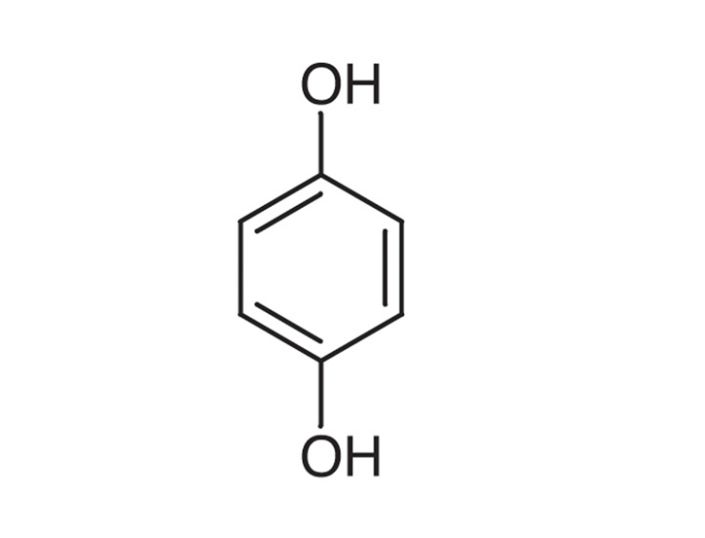
Hydroquinone has a chemical formula C₆H₆O₂. It is a white crystalline organic compound. It is renowned for its potent reducing properties as well as all-arounder industrial applications. With two hydroxyl (–OH) groups positioned on a benzene ring, it serves as a backbone for antioxidants, polymerization inhibitors, photographic developers, rubber stabilizers & much more. Its controlled redox reversibility between hydroquinone & benzoquinone makes it invaluable in both industrial processes as well as scientific research. Whether incorporated into formulations for medical, chemical, or photographic purposes, this molecule's reliability, functional efficacy & also chemical stability guarantees it remains a main compound across numerous sectors.
What is Hydroquinone?
Hydroquinone, also referred to as benzene 1,4 diol, p dihydroxybenzene, or simply quinol, is a phenolic compound characterized by two hydroxyl groups attached at opposite positions on a benzene ring. As a white to colorless crystalline solid—density ~1.3 g/cm³ and melting point ~172 °C—it’s moderately soluble in water (~5.9 g/100 mL at 15 °C) and highly soluble in alcohols. Pure hydroquinone displays low vapor pressure. This makes handling more controlled, but it can oxidize slowly in moist environments forming colored quinone derivatives.
Functionally, hydroquinone acts as a powerful reducing agent. It’s widely used in black & white photography as well as converting silver halides into metallic silver during the developing procedure. As a polymerization inhibitor, it prevents premature curing in monomer-based items (e.g., acrylics, vinyl acetate, cyanoacrylates). It also finds usage as an intermediate in antioxidant production. It is especially used for rubber, fuels, fats/oils & also in cosmetic/medical formulations (e.g., topical depigmentation agents).
However, hydroquinone use is subject to regulatory oversight. This is all due to potential side effects like skin irritation, contact dermatitis as well as concerns over carcinogenicity in some countries. Despite these considerations, its industrial versatility, i.e. from photographic, polymer as well as rubber sectors to pharmaceutical & cosmetic domains, guarantees hydroquinone remains an indispensable chemical commodity.
Chemical Specifications
| Property | Details |
|---|---|
| CAS Number | 123-31-9 |
| Appearance | TWhite to slightly pale crystalline powder |
| Molecular Formula | C6H6O2 |
| Formula / Mol. Weight | C₆H₆O₂ / 110.11 g·mol⁻¹ |
| Density | ~1.3 g·cm⁻³ |
| Melting Point | ~171–172 °C |
| Boiling Point | ~287 °C |
| Solubility | 5.9 g per 100 mL water at 15 °C; very soluble in alcohol |
| Boiling Point | ~287 °C |
| pKa | ~9.9 |
| Vapor Pressure | Very low; ~0.000018 mmHg at 25 °C |
| NFPA (H/F/R) | 2 / 1 / 0 |
Specifications
Purity: Typically ≥ 99% (photographic or industrial grade)
Physical Grade: Fine crystalline powder or granular solid
Assay: It is verified via HPLC, GC, or titrimetric methods
Heavy metals: Here conforming to ≤ specified ppm level (e.g., Fe, Pb)
Moisture: Kept to minimal levels to prevent premature oxidation
Packaging: Supplied in kraft-lined polyethylene bags or sealed drums (25 kg, 50 kg, or bulk)
Handling and Storage
1. Storage Conditions
o Store in a cool, arid & also well ventilated warehouse that is away from direct sunlight & heat
o Keep the container tightly closed. Preferably under inert atmosphere (e.g., nitrogen) to decrease oxidation
2. Handling Precautions
o Use chemical-resistant gloves, goggles, and PPE to avoid skin/eye contact
o Handle under fume hood or local extraction to limit dust inhalation
o Avoid ignition sources—may combust if heated or exposed to strong oxidizers
3. Fire & Explosion
o NFPA ratings: Flammability is 1; Health is 2; Reactivity is 0
o Use CO₂, dry chemical powder as well as water spray for extinguishing
4. Shelf-life & Stability
o Best before 2 years from manufacture if stored properly; oxidation signs (yellow/brown color) suggest compromised quality.Structure of Hydroquinone
Hydroquinone is benzene-1,4-diol, comprising a six-membered aromatic ring with two para-hydroxyl substitutes (–OH). Its IUPAC name, benzene-1,4-diol, underscores the positioning. Molecular formula is C₆H₆O₂; Mol. Wt ~110.11 Da. The structural arrangement allows resonance stabilization of the phenolic ring, facilitating reversible redox chemistry with benzoquinone. In solution, particularly at pH > 7, it undergoes quasi-micellar oxidation producing semiquinone and quinone species.
Why Choose Shakti Chemicals?
Shakti Chemicals in Mumbai, India, as experienced suppliers,exporter, traders, dealers, importers as well as distributors, offers unmatched reliability in hydroquinone supply:
Comprehensive Product Portfolio: As part of their core offerings, hydroquinone is available alongside critical intermediates and solvents.
Guaranteed Quality & Certification: Materials come with tested purity, low heavy-metal content, moisture control, and documentation (MSDS, COA).
Strong Supply Chain: Efficient packaging in sealed sacks/drums ensures safe transport and long shelf life.
Regulatory Adherence: Compliance with Indian GST and HSN Code 290722 ensures seamless domestic and export logistics.
Customer Support & Logistics: Multiple delivery modes—road, sea, air—tailored to client schedule needs.
Extensive Reach: Shakti's presence across India and export markets ensures bulk availability and competitive pricing.
Whether you are sourcing hydroquinone for photographic, polymer, cosmetic, or antioxidant applications, Shakti Chemicals remains a trusted and versatile supplier, trader, dealer, importer and distributor in Maharashtra.
Product Pack Size
Hydroquinone is typically packaged in:
25 kg kraft-lined polyethylene bags
50 kg jumbo drums or bags for industrial clients
Bulk quantities in ISO tanks or big bags, per customer requirement
Applications of Hydroquinone
Hydroquinone's chemical versatility enables widespread industrial usage:
Photographic Developers
It is central reducing agent in black-and-white film & also paper developers
Polymerization Inhibitor
Prevents premature polymerization in monomers like acrylics and vinyl acetate during storage or transport
Antioxidants & Stabilizers
Acts as an intermediate for rubber, food-grade fats/oils, motor oils, and varnish stabilizers.
Pharmaceuticals & Skin Treatments
Low-concentration formulas (≤ 5%) are used in depigmentation creams for hyperpigmentation, melasma, etc. Some regions restrict its OTC use due to safety concerns
Chemical Intermediates
Precursor for quinizarin, BHA antioxidants, dye intermediates, and PEEK polymer units.
Rust Inhibitors
Utilized in water-cooling systems at low dosage to slow metal corrosion.
Research & Specialty
Employed as a standard reductant in electrochemistry; also used for analytical phosphate assays
FAQs
Is hydroquinone soluble in water?
Yes, moderately soluble (~5.9 g/100 mL at 15 °C) and fully soluble in polar solvents like ethanol.
What is the primary use in photography?
It diminishes silver halide to metallic silver. It forms the image in B&W photography.
Can hydroquinone be used to stop polymerization?
Absolutely it averts free-radical chain reactions in monomer storage/processing.
Is it safe for topical skin use?
Yes, under regulated medical supervision. However, caution due to potential irritant and carcinogenic concerns.
How should hydroquinone be stored?
In a cool, dry, well-ventilated space, sealed to avoid moisture/oxidation.
What is its shelf life?
Approx. 2 years under proper storage, though oxidation may occur over time.
What are the packaging options?
Available in 25 kg bags, 50 kg drums, or bulk containers.
What are typical industrial grades?
Photographic grade (≥99% purity) as well as industrial/technical grades.
Are there environmental concerns?
Biodegrades and photodegrades; aquatic toxicity levels need monitoring (freshwater LC₅₀ ~0.05 mg/L).
Which industries primarily use hydroquinone?
Photography, polymer, rubber, pharmaceutical/cosmetic, chemical synthesis, and rust control.
Hydroquinone’s distinctive chemical structure—with para-positioned hydroxyl groups on a benzene ring—grants it exceptional reducing capacity, technological versatility, and industrial relevance. Whether stabilizing monomers, developing photographic film, synthesizing antioxidants, or formulating medicinal creams, its utility spans multiple critical sectors. While regulatory oversight ensures safe handling and use, its indispensable role persists in modern manufacturing and laboratory applications. Sourced from reputable suppliers like Shakti Chemicals, hydroquinone remains a trusted, high-purity, and multi-functional chemical choice.
Get in Touch with Us
Looking for a reliable Hydroquinone supplier? Contact us for bulk supply, product samples, and specifications tailored to your needs.
Contact Us- Address: 206-207, 2nd Floor, Wadala Udhyog Bhavan, Naigaon Cross Road, Wadala (West)
- Email: info@shaktichemicals.org
- Phone: +91 4044 0000