
Hydroxyamine Sulfate (HAS) Suppliers, Dealers in Mumbai, India
Hydroxylamine Sulfate (HAS)
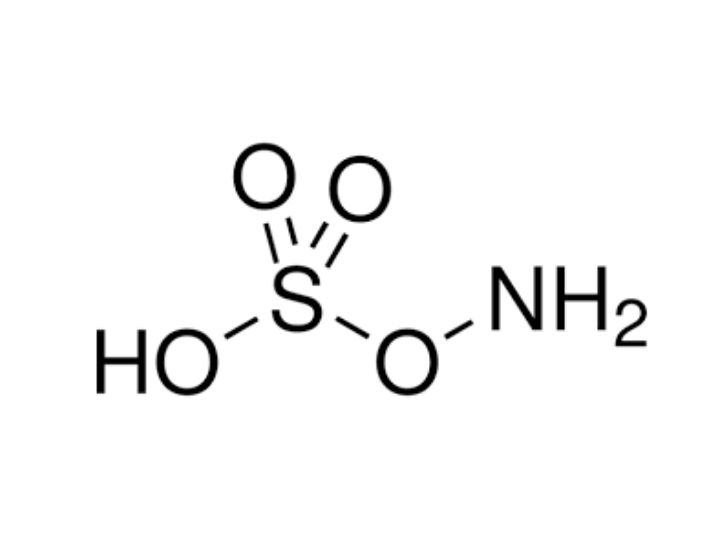
Hydroxylamine Sulfate (HAS) is a white or colorless crystalline inorganic salt. It is extensively used in chemical synthesis due to its strong reducing properties. It is derived from hydroxylamine stabilized by sulfuric acid. All this makes it safer to handle than free hydroxylamine. With applications spanning organic chemistry, photographic development, polymerization inhibition as well as analytical reagent preparation. HAS is integral to numerous industrial, laboratory & also environmental processes. However, its corrosive nature as well as toxicity demand meticulous handling as well as storage protocols.
What is Hydroxylamine Sulfate (HAS)?
Hydroxylamine Sulfate is chemically known as bis(hydroxylammonium) sulfate. This has the molecular formula (NH₂OH)₂•H₂SO₄ (or H₈N₂O₆S). It's molecular weight is approximately 164.14 g/mol. It forms white or colorless crystals with high water solubility (≈329 g/L at 20 °C) & is also slightly soluble in alcohol. The compound decomposes at around 170 °C & also melts near 177 °C. In case of heating above 60 °C can trigger instability due to the low N–O bond energy (~57 kcal/mol). This leads to potential decomposition or even explosive behavior.
Functionally, HAS is a potent reducing agent, used to convert aldehydes and ketones into oximes, acid chlorides into hydroxamic acids, and reduce metal ions in analytical chemistry. This compound serves as a radical scavenger in polymerizations. Also as an antioxidant in rubber & also fatty acid systems. Additionally, it is employed in photographic developers, formation of detection tapes for formaldehyde, and catalysts in chemical synthesis. Stabilized by sulfuric acid, HAS is safer than the free base but remains corrosive, toxic, and environmentally hazardous—especially to aquatic life.
Chemical Specifications
| Property | Details |
|---|---|
| CAS Number | 10039-54-0 |
| Appearance | White or colorless crystalline solid |
| Molecular Formula | (NH2OH)2·H2SO4 |
| Purity/Assay | ≥ 99 % |
| Solubility in Water | ≥ 329 g/L at 20 °C |
| Molecular Weight | 164.14 g/mol |
| Melting/Decomposition | 170–177 °C |
| Physical Form | Hygroscopic crystalline solid |
Specifications
pH of Aqueous Solution (10% solution):
Ranges between 3.0 – 4.0, indicating a moderately acidic nature, which contributes to its corrosive properties.
Heavy Metals Content (as Pb):
Should be ≤ 3 ppm (parts per million) to ensure minimal contamination in sensitive applications like pharmaceuticals or electronics.
Iron Content (Fe):
Typically ≤ 2 ppm, as trace iron can interfere with redox reactions and reduce shelf life in certain chemical processes.
Chloride Content:
Maintained at ≤ 5 ppm to prevent unwanted side reactions in oxidative or catalytic applications.
Loss on Drying (Moisture Content):
Should be ≤ 0.01% to ensure the material remains in a stable crystalline form and doesn't deliquesce during storage or handling.
Residue on Ignition (Sulphated Ash):
Generally ≤ 0.05%, representing the amount of inorganic impurities remaining after combustion.
Thermal Decomposition Temperature:
Begins to decompose around 170°C, and this is critical in preventing thermal runaways in storage or processing.
Bulk Density:
Ranges between 0.8 – 1.2 g/cm³, depending on particle size and packaging conditions. Useful in calculating storage and shipping volumes.
Sensitivity to Light and Air:
Though relatively stable, prolonged exposure to light and air can degrade the product and reduce purity over time.
Stability and Shelf Life:
Typically stable for 12–24 months when stored in cool, dry, and sealed conditions under 25°C.
Handling and Storage
Packaging: Use sealed, corrosion-resistant and inner-lined polypropylene containers. Store in cool, dry as well as ventilated space.
Temperature: Keep below 25 °C; avoid heat—onset of decomposition above ~60 °C; avoid open flames.
Protection: Wear gloves, goggles, and protective clothing. In absence of ventilation, don respirators.
Avoid contact with: Strong bases, oxidizers, alkali metals, copper alloys. Because of this exothermic or explosive reactions may result.
Emergency spills: Evacuate area, avoid dust; absorb spill, sweep, and dispose per regulation—do not wash down drain.
Structure of Hydroxylamine Sulfate
Hydroxylamine Sulfate is an ionic crystalline compound comprised of two hydroxylammonium cations (NH₃OH⁺) and one sulfate anion (SO₄²⁻). Its structure reflects the protonation of hydroxylamine by sulfuric acid, stabilizing the N–O bond and reducing volatility. This salt configuration enhances thermal stability relative to the free hydroxylamine base. Although, it remains sensitive to heat, light & also incompatible chemicals.
Why Choose Shakti Chemicals
Premium Purity & Consistency: High-assay HAS with stringent control over heavy metals, moisture, and impurities ensures reliable performance in sensitive industrial and lab applications.
Thorough Packaging: Offered in secure, DOT-compliant, UN-2865 grade containers via reputed suppliers, dealers, importers, and distributors.
Regulatory Support: HACCP-grade documentation, MSDS, and COAs provided in compliance with global trade standards.
Global Logistics: Efficient supply chains managed by experienced exporters, dealers, and importers for timely delivery.
Technical Support: Pro personnel equipped to advise traders, distributors as well as end-users on applications and safety measures.
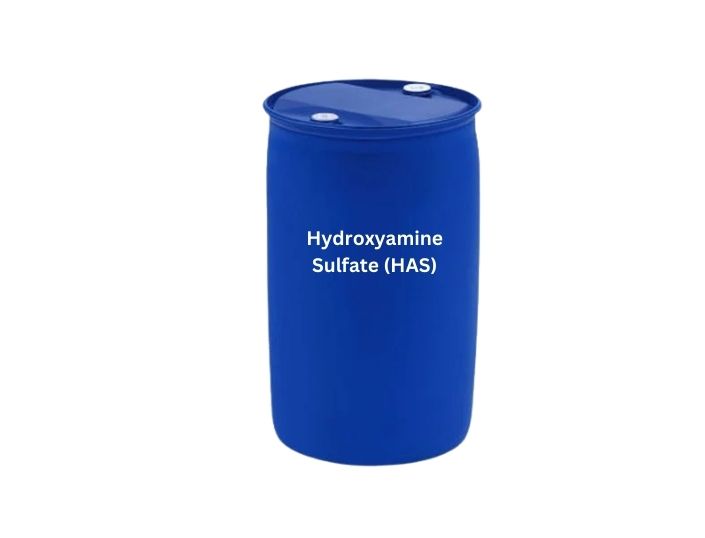
Product Pack Size
Standard industrial packaging: 25 kg to 55.12 lb (≈25 kg) in sealed bags or drums
Research-grade quantities: Bottles of 100 g to 1 kg available.
Larger bulk or customized packaging available on request from suppliers, exporter and import networks.
Applications of Hydroxylamine Sulfate (HAS)
Organic Synthesis: Converts carbonyls to oximes; acid chlorides to hydroxamic acids.
Analytical Chemistry: Reagent in trace metal quantification (e.g., mercury via AAS)
Photographic Development: Acts as stabilizer in color-developer formulations.
Polymer Chemistry: Radical scavenger, copolymerization inhibitor.
Textile & Rubber: Antioxidant as well as swelling agent in textiles & synthetic rubber.
Environmental Testing: Component in sensor tapes for formaldehyde detection.Hides & Leather: Dehairing reagent in leather processing.
Laboratory Reagent: Established use in biochemical research, synthesis pathways.
Corrosion Therapy: Applied in rust-prevention and passivation processes.
FAQs
Is HAS corrosive?
Yes this is classified as corrosive to metals and irritant to skin and eyes (GHS Physical/Eye/Skin categories).
What are the hazards?
Acute oral/dermal toxicity (Category 4), suspected carcinogen (Category 2), skin sensitizer, organ damage (STOT-RE Category 2), and aquatic toxicant.
What temperature is safe for storage?
Keep below 25 °C; avoid heating above 60 °C to prevent decomposition and explosion risk.
Is it explosive?
Not inherently explosive but decomposition under confinement/heat can violently react.
Major incompatibilities?
Avoid strong bases, oxidizers, alkali metals, copper alloys—risk of exothermic reaction.
Environmental impact?
Very toxic to aquatic life—EC₅₀ (algae) ≈0.72–0.86 mg/L; LC₅₀ (fish) ≈3–7 mg/L; EC₅₀ (Daphnia) ≈1.6 mg/L.
Required PPE?
Use nitrile gloves, chemical goggles, lab coat, and appropriate dust respirator.
First-aid for skin contact?
Wash asap with soap and water; seek medical advice if irritation persists.
Can it cause methemoglobinemia?
Yes—accidental ingestion or inhalation may lead to methemoglobinemia and pulmonary edema.
Disposal methods?
Dispose as hazardous chemical waste per local regulations; do not empty into drains.
Hydroxylamine Sulfate (HAS) is a versatile and powerful chemical reagent for industrial, analytical, and laboratory applications. Its high purity, water solubility, and reducing capabilities make it indispensable in organic synthesis, photography, environmental analysis, polymer processing, and more. However, its corrosive nature, toxicity, and thermal sensitivity require stringent handling, storage, and disposal measures. Shakti Chemicals offers premium-grade HAS supported by comprehensive packaging, compliance documentation, and technical guidance via its network of suppliers, traders, dealers, importers, and distributors—ensuring both performance reliability and safety assurance for users across
Get in Touch with Us
We offer top-quality Hydroxylamine Sulfate in bulk quantities. Contact us now for a quote, product specifications, or MSDS.
Contact Us- Address: 206-207, 2nd Floor, Wadala Udhyog Bhavan, Naigaon Cross Road, Wadala (West)
- Email: info@shaktichemicals.org
- Phone: +91 4044 0000