
Methacrylic Suppliers, Dealers in Mumbai, India
Methacrylic Acid
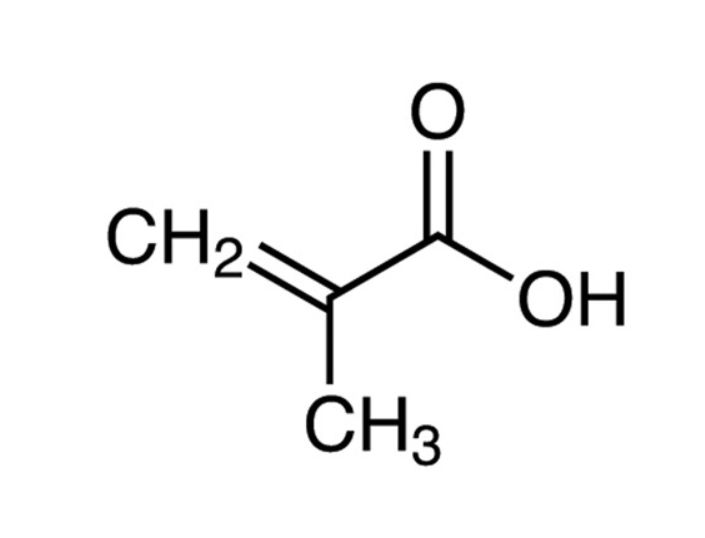
Methacrylic Acid—also known as 2 methylpropenoic acid or methacrylic acid (MAA)—is a crucial monomer in the polymer and specialty chemicals industries. Its distinctive unsaturated carboxylic acid structure combines a C=C double bond adjacent to a carboxyl group, rendering the molecule highly reactive for free radical polymerizations. MAA is valued for its ability to impart flexibility, hardness as well as UV stability to copolymers. These copolymers are used in coatings, adhesives as well as plastics. Owing to its versatile reactivity, it forms the backbone of polymethacrylates used across automotive, architectural, electronics as well as biomedical sectors. Quality, consistency as well as purity elevate MAA as a performance pivot in modern material design.
What Is Methylacrylic Acid
Methylacrylic Acid, widely known as methacrylic acid (C₅H₈O₂), is a colorless or pale yellow, unsaturated aliphatic carboxylic acid featuring a branched methyl group on the α carbon of acrylic acid. It’s fundamentally characterized by:
• Chemical Structure: The structure consists of 2 methylprop 2 enoic acid
• Functional Groups: Carboxyl (–COOH) & vinyl (C=C)
These functionalities endow MAA with high reactivity towards radical, cationic as well as ionic polymerization. It allows it to generate homopolymers or copolymers with methyl methacrylate, acrylates, styrene & also other vinyl monomers.
Key Properties
• Volatility & Boiling Point: Moderate volatility & also boiling range ~162–165 °C
• Acidity: It’s a stronger acid (pKa ≈ 4.66) in comparison to acrylic acid due to the electron donating methyl group
• Reactivity: This is ideal for radical polymerizations; enables crosslinking and grafting
• Solubility: Thoroughly miscible in water & also most organic solvents
Industrial Significance
As a monomer, MAA is pivotal for producing polymethacrylic products. It is renowned for their transparency, abrasion and weather resistance, and low-temperature flexibility. Applications span diverse sectors:
• Act as acrylic coatings (durable, UV resistant finishes)
• They are use in pressure sensitive adhesives (e.g., tapes, labels)
• Ion exchange resins (e.g., for chromatographic separations)
• Also used as chemical intermediates (esters, amides, pharmaceuticals)
By virtue of its unsaturated carboxylic acid structure, this compound serves as both a building block as well as a modifier. It yields copolymers with tailored thermal, mechanical & also chemical-defiant properties. Aside from its industrial uses, it finds niche roles in specialty resins, water treatment agents, and even dental materials, cementing its position as a versatile and essential monomer in modern polymer chemistry.
Chemical Specifications
| Property | Details |
|---|---|
| CAS Number | 79-41-4 |
| Chemical Name | Methacrylic Acid, MAA |
| Molecular Formula | C4H6O2 |
| Appearance | Colorless to pale yellow liquid |
| Purity | ≥ 99.0 % (typical industrial grade) |
| Molecular Weight | 86.09 g/mol |
| Odor | Sharp, pungent resinous odor |
| Boiling Point | ~162–165 °C @ 760 mmHg |
| Density | ~1.02 g/mL @ 20 °C |
| Refractive Index | ~1.445 @ 20 °C |
| pH (10 % aqueous) | ~2.4 |
| Flash Point | ~61 °C (closed cup) |
| Solubility | Completely miscible with water, alcohols, esters |
| Storage Temp. | 10–25 °C (cool, well-ventilated area) |
| UN Number | UN 3264 (Corrosive Liquid, Acidic, Inorganic, n.o.s.) |
Technical Specifications
Acid Value: ≥ 99.5 % equivalent to methacrylic acid
Moisture: ≤ 0.1 %
Appearance: Clear, free of visible particulates
Color (APHA/Hazen): ≤ 50
Ash Content: ≤ 0.01 %
Heavy Metals: ≤ 5 ppm (as Pb)
Non-volatile Residue: ≤ 0.05 %
These parameters ensure grade suitability for polymerization, adhesives, coating systems, and chemical synthesis.
Handling and Storage
Storage Conditions:
o Always store in sealed, corrosion-resistant containers (stainless steel or coated carbon steel).
o Maintain temperature between 10 °C to 25 °C.
o Guarantee good ventilation as well as secondary containment.
• Handling Precautions:
o Use explosion-proof equipment.
o Ground containers during transfer.
o Prevent moisture ingress—hygroscopic nature.
• Personal Protective Equipment (PPE):
o Acid-defiant gloves
o Splash-proof goggles/shield
o Acid-resistant lab coat or coveralls
o Respiratory protection if airborne concentrations exceed permissible exposure limits (PEL)
• Spill Management:
o Leave area & try to contain spill.
o Absorb with inert materials (e.g., vermiculite) as well as neutralize with dilute sodium bicarbonate.
o Dispose according to local hazardous-waste regulations.
• Fire Safety:
o Use CO₂ or dry chemical extinguishers.
o In confined spaces, monitor for thermal decomposition producing irritating or toxic vapors (CO/CO₂).
Structure of Methacrylic Acid
Double Bond (C=C): It provides reactivity in polymerization
α Methyl Group (–CH₃): This increases steric hindrance. It increases thermal as well as mechanical stability in derived polymers
Carboxylic Acid (–COOH): Makes it capable of hydrogen bonding, ion exchange reactions, and acid catalyzed esterification
This trifunctional arrangement accounts for the remarkable versatility of MAA—simultaneously facilitating polymerization, crosslinking, and functional group derivatization.
Why Choose Shakti Chemicals
Collaborating with Shakti Chemicals—including their MAA suppliers, exporter, traders, dealers, importers or distributors that brings distinct value:
1. Assured Quality: It provides consistent ≥ 99 % purity with detailed batch certificates.
2. Global Logistics Expertise: Trusty supply chains via seasoned import/export professionals.
3. Regulatory Adherence: Product as well as documentation aligned with REACH, TSCA & also Indian regulations.
4. Mechanical Support: Application engineers fluent in polymer, coatings as well as emulsion chemistry.
5. Competitive Pricing: Effective supply chain allows cost effective pricing.
6. Flexible Packing/Delivery: Available in drums, IBC totes, or bulk, curated via trusty dealers or traders.
7. After Sales Service: They do responsive handling of technical queries as well as rapid replenishment via nationwide distribution network.
Product Pack Size
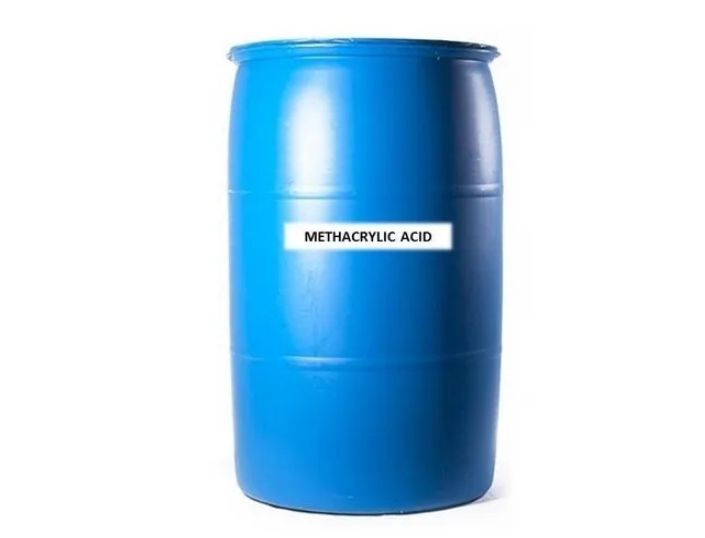
Small Scale: 25 kg HDPE/carbon steel lined drums
Medium Scale: 250 kg IBC totes
Bulk: ISO tanks, flexitanks as well as pipeline deliveries
Option for custom-lot sizes based on MOQ
Packaging made to minimize moisture ingress and ensure material integrity
Applications of Methacrylic Acid
1. Acrylic Polymers & Coatings: This imparts hardness, UV durability, clarity. This compound is also used in automotive as well as architectural coatings
2. Adhesives & Sealants: Vinyl resin-based adhesives for tapes, labels & also packaging
3. Water Soluble Copolymers: Superplasticizers, flocculants, dispersants for cement, ceramics & also sludge processing
4. Ion Exchange & Chromatography Resins: Polymers with carboxy groups used in biomedical separations as well as water softening
5. Photographic & UV Curable Systems:This is used as Co-monomer for acrylate-based UV coatings
6. Pharmaceutical & Fine Chemicals Intermediates: Esterification to methyl/methacrylate esters; amide derivatives
7. Acrylic Rubber & Elastomers: It helps in increasing oil/heat resistance in sealants, gaskets, membranes
8. Coatings Additives & Plastic Modifiers: It acts as crosslinking agents to change scratch defiance as well as cohesion
FAQs
1. What is methacrylic acid used for?
It fundamentally serves as a monomer for coatings, adhesives, specialty resins as well as intermediates.
2. How is MAA produced industrially?
Produced majorly via isobutylene oxidation or acetone→methacrolein→MAA routes, followed by purification.
3. Can MAA be polymerized directly?
Yes it can be polymerized via free radical initiators to form polymethacrylic acid; usually copolymerized to tailor properties.
4. Is MAA considered corrosive?
Yes, it’s corrosive to metals along with being irritant to skin & also eyes, so always handle with care.
5. What safety measures are required?
Use PPE (gloves, goggles, respirators), maintain ventilation & also implement grounding.
6. Is MAA water soluble?
This compound is fully miscible with water & also acidic aqueous solutions whose pH ~2.4 (10 %).
7. How is it stored?
It is stored properly in sealed containers at 10–25 °C. Also keep them away from ignition and moisture.
8. What is MAA’s shelf life?
Typically 12, 24 months if sealed and stored under recommended conditions.
9. Can MAA degrade?
Exposure to heat, light, and oxygen can cause polymerization or color formation.
10. Are there transportation regulations?
Yes—classified as UN 3264 (Corrosive Acidic Liquid); packaging/labeling per IMDG, ADR, IATA.
Methacrylic Acid is a strategically vital monomer whose versatile functionalities enable a broad spectrum of high-performance polymers, resins, adhesives, and specialty materials. Its α-methylation affords stability and durability, while its reactive C=C and acid groups allow precise polymer design. With consistent standards, robust logistics, and full regulatory compliance, Shakti Chemicals in Maharashtra—through its network of suppliers, traders, dealers, importers, and distributors—offers a dependable and economical solution for MAA sourcing. When supported by rigorous technical expertise and responsive service, Shakti Chemicals in Mumbai, India, stands as an exceptional partner in advancing material innovation and industrial application.
Get in Touch with Us
Looking for high-quality Methacrylic Acid? Contact us today for bulk orders and technical details.
Contact Us- Address: 206-207, 2nd Floor, Wadala Udhyog Bhavan, Naigaon Cross Road, Wadala (West)
- Email: info@shaktichemicals.org
- Phone: +91 4044 0000