
Ethyl Acrylate Suppliers, Dealers in Mumbai, India
Ethyl Acrylate – A Key Monomer for Acrylic Polymers

Ethyl Acrylate is a clear & colorless liquid. It is widely used as a key building block in the chemical industry. It is known for its fast polymerization as well as excellent adhesion properties, it is the ethyl ester of acrylic acid and has the molecular formula C₅H₈O₂. It serves as a constitutional component in the production of paints, adhesives, plastics & also coatings. Due to its reactive vinyl & ester functional groups, it is a preferred monomer for copolymerization processes. Ethyl Acrylate is valued for its versatility. Due to its flammability & hidden health hazards proper & cautious handling is so important.
What is Ethyl Acrylate?
Ethyl Acrylate (EA) is a really versatile as well as significant monomer. It is used across various industrial applications. It is chemically represented by the formula C₅H₈O₂. This is the ethyl ester of acrylic acid. This colorless liquid with a sharp & acrid smell is known for its rapid polymerization properties. This plays a crucial role in the production of polymers & resins. Owing to its dual reactive sites — an ester group as well as a vinyl group — Ethyl Acrylate participates in a wide range of chemical reactions. This makes it an essential compound in the manufacturing of adhesives, paints, coatings, textiles & sometimes plastics.
The compound boasts excellent adhesive properties, water resistance as well as durability. This makes it ideal for use in emulsion polymers & pressure-sensitive adhesives. It also serves as a key transition in the synthesis of many other chemical derivatives. Furthermore, it demonstrates excellent copolymerization behavior with other acrylates & monomers such as methyl methacrylate, styrene & vinyl acetate.
Despite its utility & handling Ethyl Acrylate needs stringent compliance to safety protocols. This is due to its flammability & potential health hazards. As global sectors or companies continue to demand great-performance polymers & specialty chemicals, the significance or need of high-purity, industrial-grade Ethyl Acrylate exporter supplied by trusty traders becomes paramount. This is where Shakti Chemicals, a reputed name among suppliers, dealers, importers & distributors, steps in to offer unmatched quality along with service..
Product Description Table
| Property | Details |
|---|---|
| CAS Number | 140-88-5 |
| Name of Product | Ethyl Acrylate |
| Molecular Formula | C5H8O2 |
| Chemical Formula | C₅H₈O₂ |
| Appearance | > Colorless, transparent liquid |
| Molecular Weight | 100.12 g/mol |
| Odor | Pungent, acrid |
| Boiling Point | 99–101°C |
| Flash Point | 9°C (closed cup) |
| Density | 99–101°C |
| Boiling Point | 0.92 g/cm³ at 20°C |
| Solubility in Water | lightly soluble |
| Refractive Index | 1.402 (at 20°C) |
| Purity | ≥ 99.5% |
| Stability | Stable under recommended conditions |
Specifications
Acid Value: Max. 0.01%
Inhibitor (MEHQ): 10 ± 5 ppm (it is a standard for polymerization inhibition)
Color (APHA): Maximum 10
Water Content: Max. 0.05%
Boiling Range: 99–101°C
Density of compound at 20°C is approx: 0.918 – 0.922 g/cm³
Residue on Evaporation: Max. 0.005%
These specifications come in line with international quality standards & also make Ethyl Acrylate a reliable choice for high-end industrial use.
Handling and Storage
Handling:
Ethyl Acrylate must be handled with proper care due to its volatile & flammable nature. Avoid direct contact with skin & also inhalation of vapors. Use only in well-ventilated areas & also wear appropriate PPE including gloves, glares & flame-defiant clothing or suit.
Always handle under an inert surrounding to avoid polymerization reaction.
Guarantee that containers are tightly sealed when not in use.
Use explosion-proof equipment as well as non-sparking tools.
Storage:
Store in a cool, arid & well-ventilated area.
Recommended storage temperature: 2–8°C
Keep away from direct sunlight, heat sources, oxidizers, and strong acids.
Use stainless steel or aluminum containers with proper inhibitor levels.
Always keep a check on the inhibitor level (e.g., MEHQ) uniformly or daily to avoid unwanted polymerization.
Structure of Ethyl Acrylate
Ethyl Acrylate’s molecular structure comprises an acrylic group attached to an ethyl ester, enabling it to undergo copolymerization with a wide range of monomers. Here is the structural formula:
Chemical Structure:
C5H8O2
Functional Groups: Vinyl group (–CH=CH2) and ester group (–COOCH2CH3)
Reactivity: The vinyl group undergoes free-radical polymerization. This polymerization makes it suitable for forming complex polymer chains.
Why Choose Shakti Chemicals?
At Shakti Chemicals, we pride ourselves on being one of the most reliable acid & chemical suppliers, traders, dealers, importers & distributors in the industry. Our unwavering dedicated to quality, safety & customer satisfaction makes us a preferred choice for companies seeking consistent as well as high-grade chemical supplies.
Our Strengths:
Global Sourcing Network: We import Ethyl Acrylate from top-tier & certified manufacturers to guarantee product consistency.
Certified Quality: Every batch is thoroughly tested for purity, stability as well as compliance with international norms.
Safe Packaging: We offer customized and leak-proof packaging options for bulk and retail needs.
Timely Delivery: With an efficient logistics team, we guarantee prompt and secure deliveries.
User-Centric Approach: Our technical experts provide support as well as guidance from procurement to post-sales service.
Trust Shakti Chemicals for your Ethyl Acrylate needs and experience unmatched professionalism in chemical distribution in Maharashtra, India.
Product Pack Size
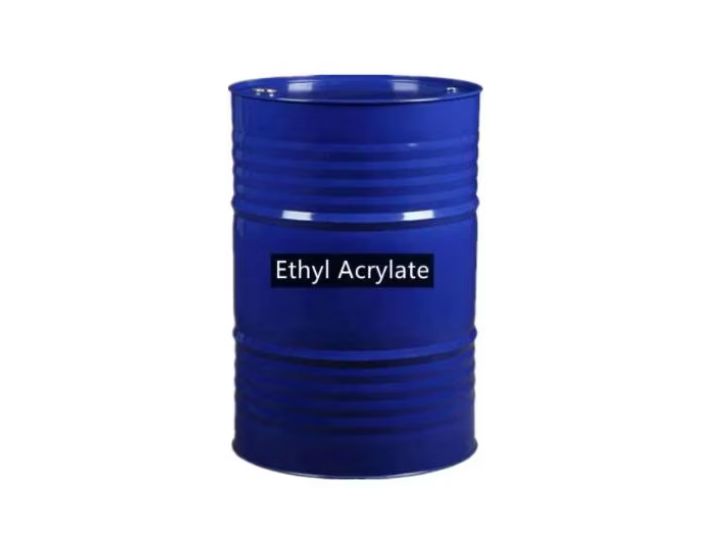
At Shakti Chemicals in Mumbai, we provide you with acid or chemicals in multiple packaging options to suit your company's needs:
| Packaging Type | Size options |
|---|---|
| HDPE Drums | 200 Liters |
| Intermediate Bulk Containers (IBCs) | 1000 Liters |
| Tanker Loads | Bulk (customizable volume) |
| Custom Packaging | Available upon request |
Each pack is labeled with batch number, manufacturing date, expiry date, inhibitor content as well as safety instructions to ensure full traceability & also compliance.
Applications of Ethyl Acrylate
Ethyl Acrylate is world-known for its high grade reactivity as well as flexibility. These all makes it a prime ingredient in various industrial applications:
1. Adhesives & Sealants: Used in pressure-sensitive adhesives for labels, tapes as well as packaging.
2. Paints & Coatings: Imparts durability as well as gloss in emulsion paints and industrial coatings.
3. Textile Industry: Enhances fabric finishes and imparts wrinkle resistance.
4. Plastics & Polymers: Integral in the production of impact-resistant plastics.
5. Paper Industry: Acts as a binder in coatings and improves paper strength.
6. Leather Finishes: Improves abrasion resistance along with flexibility.
7. Automotive: This is often used in coatings, sealants & specialty plastic parts.
8. Construction: This product forms part of waterproofing compounds as well as concrete bonding agents.
9. Packaging Films: It enhances flexibility & also printability of films.
10. Ink Formulations: Offers fast drying access as well as adhesion properties in printing inks.
Frequently Asked Questions (FAQs)
1. What is Ethyl Acrylate fundamentally used for?
It is widely used in the manufacturing of paints, adhesives, sealants as well as plastics, particularly in emulsion polymers.
2. Is Ethyl Acrylate hazardous?
Yes, Ethyl Acrylate is a combustible substance & may cause irritation to skin, eyes & sometimes to the respiratory tract. It should be handled or managed under stringent safety guidelines.
3. Can this chemical polymerize on its own?
Yes. It can undergo impromptu polymerization if not stabilized. Hence, inhibitors like MEHQ are added or used to prevent this.
4. Is Ethyl Acrylate water-soluble?
Ethyl Acrylate is slightly soluble in water but completely miscible with most organic solvents.
5. What precautions should be taken during storage?
It should be stored in a cool & arid area away from heat sources as well as oxidizing agents. Inhibitor levels must be uniformly tracked.
6. Can it be used for medical applications?
It should be stored in a cool & arid area away from heat sources as well as oxidizing agents. Inhibitor levels must be uniformly tracked.
7. What is the shelf life of Ethyl Acrylate?
Typically, 6 to 12 months when stored under ideal conditions with sufficient inhibitor levels.
8. How does it differ from Methyl Acrylate?
The main difference lies in the ester group; Ethyl Acrylate contains an ethyl group while Methyl Acrylate has a methyl group, affecting their reactivity and boiling points.
9. What industries use Ethyl Acrylate the most?
Paints and coatings, adhesives, textiles, automotive, and construction industries are the top consumers.
10. How is Ethyl Acrylate transported?
It is transported in stainless steel or aluminum tanks, often with temperature control and inhibitor monitoring systems.
For the primest quality Ethyl Acrylate at competitive prices, contact Shakti Chemicals, your trusted supplier of rare or often used chemicals or acids across global markets. They buy their products from premium and certified manufacturers.
Get in Touch with Us
Looking for high-quality Ethyl Acrylate? Contact us today for bulk orders and technical details.
Contact Us