
Methyl Chloroforate Suppliers, Dealers in Mumbai, India
Methyl Chloroforate – A Versatile Chemical Intermediate
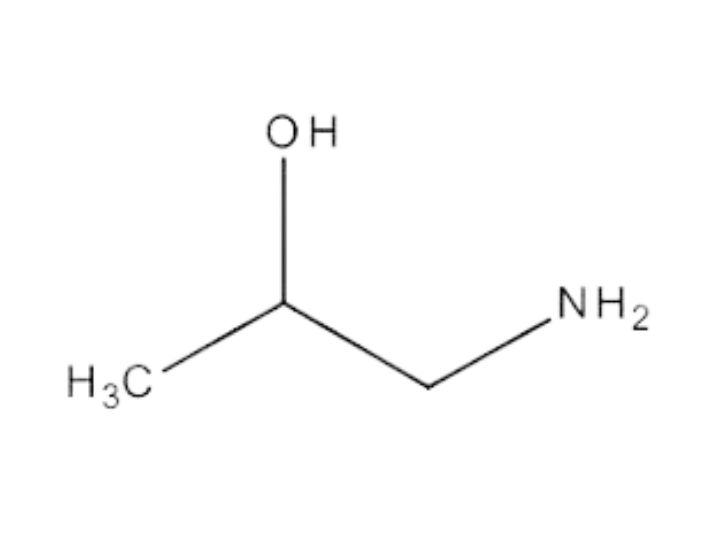
Methyl Chloroforate is a high-purity o+rganic acid ester extensively employed in specialty chemical synthesis, pharma intermediates, and advanced research. Its distinctive molecular structure—combining a methyl ester with a chloroalkyl moiety—endows it with both high reactivity and versatility, making it an essential reagent in the manufacture of complex molecules. Engineered for exacting performance. This compound delivers reliable behavior in esterification, chlorination as well as derivatization reactions. Whether utilized in laboratory-scale R&D or scaled-up industrial processes, Methyl Chloroforate offers uniformity, reproducibility as well as compatibility with diverse solvent systems and reaction conditions.
What is Methyl Chloroforate?
Methyl Chloroforate is an organochlorine ester. It is accurately taught as methyl [chloroformate or methyl ester]. Apparently, it also has a methyl ester bonded to a chloroformate functional group. This structural arrangement confers dual reactivity. For further knowledge the ester component facilitates conventional ester-based chemistry, while the chloroformate group enables facile acylation as well as in situ generation of acyl chlorides under mild conditions.
Chemically, Methyl Chloroforate is classified among the acid chlorides—a family of reactive electrophiles frequently employed to activate carboxylic acids or to introduce protective groups in peptide and polymer chemistry. The presence of the chloro substituent heightens its reactivity compared to simple methyl esters, allowing reactions to proceed without the need for harsh activation techniques.
Applications of this reagent span from pharmaceutical development where it may be used to install methyl carbonate or chloroformate protecting groups to agrochemical synthesis. Here selective acylation steps are pivotal. This makes the steps. In polymer science, this reagent can serve to functionalize monomers or chain ends. This improves performance attributes like solubility or surface adhesion. Additionally, in advanced materials research, such functionality contributes to the controlled synthesis of coordination complexes or silica-supported catalysts.
Product Description Table
| Attribute | Details |
|---|---|
| CAS Number | 79-22-1 |
| Synonyms or Same Name | Methyl Chloroformate; Methyl Carbonochloridate; Methyl Formyl Chloride |
| Molecular Formula | C2H3ClO2 |
| Chemical Formula | C₂H₃ClO₂ |
| Appearance | > Colorless to pale yellow liquid |
| Molecular Weight | 94.50 g/mol |
| Purity | Typically ≥ 99% (GC/LC verified) |
| Boiling Point | 79–82 °C @ 20 mmHg (literature) |
| Flash Point | ~ −15 °C (closed cup) |
| Density | ~ 1.18 g/cm³ @ 20 °C |
| Refractive Index (n²⁰D) | ~ 1.374–1.380 |
| Specification Standards | Conforms to ISO 9001, ISO 14001, OHSAS 18001 (where applicable) |
Specifications
1. Chemical Purity: It is ≥ 99.0 %
2. Moisture Content: This is < 0.1 % (KF titration)
3. Color (APHA): ≤ 20 Hazen Units
4. Assay Method: GC-FID or GC-MS
5. Acidity (as HCl): < 0.05 %
6. Residue on Evaporation: < 0.01 %
7. Water Content: < 0.02 % (Karl Fischer)
8. Heavy Metals (as Pb): < 10 ppm
9. Chloride Content (non-reactive): < 0.05 %
10. Density (20 °C): 1.17–1.19 g/cm³
These specifications guarantee high performance in accurate chemical processes needing minimal impurities.
Handling and Storage
To preserve quality as well as maintain user safety, observe the following best practices:
• Storage Conditions:
o Store in a cool (0–10 °C), arid & room with windows.
o Keep containers tightly sealed or vacuumed in an inert atmosphere (nitrogen or argon).
o Shield from light to decrease subtle degradation.
• Material Compatibility:
o Avoid contact with moisture, acids, or alkalis.
o Store in corrosion-resistant containers (stainless steel 316L or fluoropolymer-lined drums).
• Handling Precautions:
o Always work in a fume hood due to volatility and lachrymatory nature.
o Personal protective equipment (PPE): You need chemical-resistant gloves (e.g., nitrile), goggles/face shield, lab coat as well as optionally full-body suit.
• Fire & Explosion Hazards:
o Highly flammable with low flash point.This eliminates ignition sources.
o Keep portable fire extinguishers (CO₂ / dry chemical) nearby during storage and handling.
• Emergency Measures:
o In case of spill: evacuate personnel. Try to stop it with inert absorbent (e.g., vermiculite) & also collect into sealed chemical waste drums.
o Ventilate area thoroughly and decontaminate surfaces with alkaline solution (e.g., 5% sodium carbonate), followed by water rinse.
• Waste Disposal:
o Dispose through a licensed chemical waste contractor.
o Do not pour into drains.
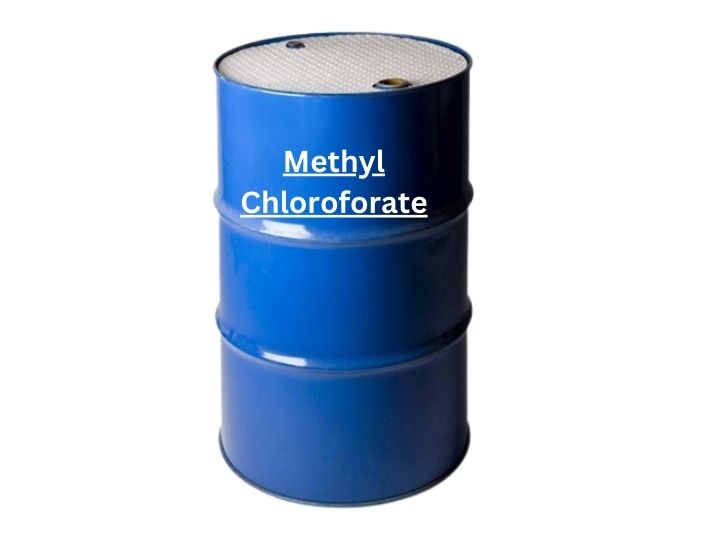
Structure of Methyl Chloroforate
The molecular structure is illustrated below:
CH3OCOCl
Carbonyl Carbon (C=O): central in reactivity; supports acylation chemistry.
Chloride (–Cl): It is a highly active leaving group which makes it electrophilic.
Methyl Ester (–O–CH₃): This contributes to polarity as well as moderate reactivity.
This structure enables:
Nucleophilic acyl substitution (e.g., amines → carbamates, alcohols → carbonates),
Chloride exchange/replacement reactions
In situ generation of reactive intermediates (e.g., acyl chlorides) under mild conditions.
Product Pack Size
Laboratory-scale Bottles:
100 mL and 500 mL amber glass bottles with PTFE-lined caps.
Pilot-scale Drums:
5 L to 25 L fluoropolymer-lined steel drums.
Bulk-scale Containers:
200 L stainless steel drums (∼235 kg net).
1 m³ ISO-lined totes (IBC) for high-volume plant use.
Each container is clearly labelled with batch number, manufacturing date, expiry/retest date, and hazard symbols. Certificates of Analysis (CoA) and Safety Data Sheets (SDS) are included with every shipment.
Applications of Methyl Chloroforate
Methyl Chloroforate’s reactive advantages serve many sectors:
1. Pharmaceuticals & Fine Chemicals
o This compound helps in launching methyl carbonate groups in API synthesis.
o It protects amino or hydroxyl functionalities via carbamate linkages.
2. Organic Synthesis & Peptide Chemistry
o This compound allows mild peptide coupling (N-carbamate formation). This aids in solubility & also purification.
o Activates carboxylic acids for downstream modifications.
3. Agrochemical Intermediates
o This generates chloroformate intermediates used in herbicide/pesticide molecules.
o Delivers controlled-release functional groups.
4. Polymer & Materials Science
o Functionalizes polymer end-groups (e.g., polyurethanes, polycarbonates).
o Anchors catalysts or supports on silica and polymer matrices.
5. Surface & Coatings Industry
o Creates active carbonate groups on substrates for cross-linking or adhesion enhancement.
o Employed in primer formulations.
6. Analytical Chemistry
o Derivatization reagent for GC/LC-MS; improves volatility and detectability of carboxylic acids.
7. Specialty Research
o Coordinates organic–inorganic frameworks via the chloroformate group.
o Used in catalyst linker synthesis or supramolecular assembly.
Why Choose Shakti Chemicals?
When sourcing Methyl Chloroforate, Shakti Chemicals stands out as reliable exporter, suppliers, efficient traders, knowledgeable dealers, proactive importers, and responsive distributors. Here's why they excel:
• Thorough global logistics: Shakti Chemicals coordinates freight-forwarding across continents. This guarantees punctual deliveries and compliance with international shipping protocols.
• Consistent quality guarantee: Every batch undergoes rigorous QC testing—GC, KF water analysis, heavy metal screening—to match the datasheet specifications.
• Regulatory adherence: As accredited importers and distributors, they maintain compliance with REACH, TSCA, and major national chemical regulations.
• Technical support: Dealership includes tailored technical assistance—application optimization, material compatibility advice, and troubleshooting support.
• Flexible supply formats: Options range from 500 mL amber glass bottles to 200 L stainless steel drums, satisfying both R&D labs and large scale manufacturers.
• Competitive pricing: Traders benefit from transparent, value driven pricing models as well as volume discounts.
• After sales engagement: Their importer or distributor network guarantees ongoing communication—from inventory tracking to reorder support.
• Credit facilities & documentation: The firm handles Letters of Credit, HS Tariff codes as well as necessary customs paperwork seamlessly.
FAQs
1. What is the shelf life of Methyl Chloroforate?
Typically 12 months when stored below 10 °C in sealed, moisture free containers. Retest dates are assigned for ongoing quality assurance.
2. Can it be shipped by air?
Yes—categorised as UN 1805 (Chloroformates, n.o.s.). IATA compliant packaging as well as documentation are mandatory.
3. Is it compatible with aqueous systems?
No. It hydrolyzes fastly which releases methanol as well as HCl. Use only under anhydrous conditions.
4. What solvents are recommended?
Dry aprotic solvents like DCM, THF, toluene as well as acetonitrile are ideal. Avoid moisture-prone solvents such as water, ethanol & also pyridine.
5. What safety concerns exist?
It is flammable, corrosive, and a lachrymator. PPE and fume hoods are essential. Refer SDS section 8 for exposure limits.
6. How to quench excess reagent?
Add excess dry isopropanol or tert-butanol under cooling. This is done to neutralize unreacted reagents before aqueous work-up comes.
7. What are the Alternative reagents?
Phenyl or benzyl chloroformate are alternatives. But these may alter reaction selectivity or need harsher conditions.
8. Is it reactive toward amines and alcohols?
Yes this compound forms carbamates with amines & also carbonates/esters with alcohols under ambient to mild conditions (0–40 °C).
9. Can it be used in peptide synthesis?
Yes this compound facilitates N terminal carbamate protection to aid peptide chain assembly as well as purification.
10. Does this compound have any environmental hazards?
Degrades into HCl & also methanol.The waste must be neutralized as well as processed per local regulations. Avoid discharge into waterways.
Methyl Chloroforate is a powerful, versatile ester reagent, prized for its dual reactive groups that enable precise acylation, protection, and functionalization in high-end chemical processes. With exceptional purity, stability as well as compatibility, it supports applications across pharma, agrochemistry, polymer science & many beyond. Backed by Shakti Chemicals—esteemed suppliers, traders, dealers, importers or distributors with rigorous quality control as well as technical support this product guarantees reliability from bench to bulk scale. For labs & also manufacturers demanding consistency, efficiency as well as comprehensive service, Methyl Chloroforate remains a top-tier reagent of choice.
Get in Touch with Us
Looking for high-qualityMethyl Chloroforate? Contact us today for bulk orders and technical details.
Contact Us- Address: 206-207, 2nd Floor, Wadala Udhyog Bhavan, Naigaon Cross Road, Wadala (West)
- Email: info@shaktichemicals.org
- Phone: +91 4044 0000