
Dimethyl Malonate (DMM)
Dimethyl Malonate (DMM) – Key Intermediate for Pharma and Agrochemicals
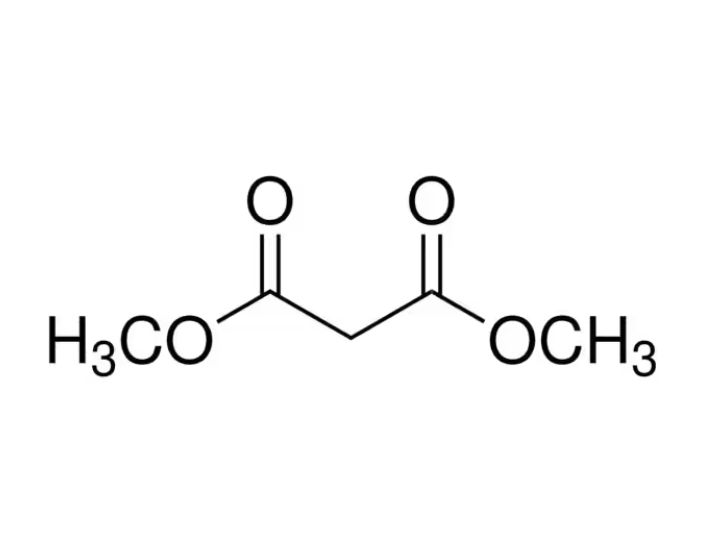
Dimethyl Malonate (DMM) is a highly versatile diester of malonic acid. It plays a pivotal role as a reactive intermediate in organic processes. Its clear, colorless liquid form & also has high purity which make it ideal for medicinal, agrochemical, fragrance & fine chemical applications. With its excellent solubility in organic solvents, stability as well as reactivity. This is used especially in malonic ester synthesis. DMM offers a reliable, cost effective option for large scale production & R&D protocols.
What is Dimethyl Malonate (DMM)?
Dimethyl Malonate, chemically known as 1,3 dimethyl propanedioate, is the dimethyl ester derived from malonic acid, with the molecular formula C₅H₈O₄ and a molecular weight of 132.11–132.12 g/mol. It appears as a colorless & also almost colorless liquid, slightly soluble in water but readily miscible with ethers & alcohols. Key physicochemical properties include a melting point around 62 °C, a boiling range of 180–184 °C & also a density of approximately 1.15–1.16 g/cm³.
In organic synthesis, DMM is prized for its ability to undergo malonic ester synthesis. This enables the construction of substituted carboxylic acids, barbiturates, vitamins (B₁, B₆), amino acids & pharmaceutical intermediates. It also serves in the fragrance industry, particularly in the synthesis of jasmonates like methyl dihydrojasmonate (Hedione), a key ingredient in numerous high end perfumes. Notably, Hedione was among the top-selling fragrance compounds by volume.
DMM is typically produced via esterification routes from malonic acid or analogous processes like the carbonylation of dimethoxymethane. Major global producers manufacture DMM in bulk using chloroacetic acid as well as sodium cyanide-based routes developed decades ago.
Product Description Table
| Property | Details |
|---|---|
| CAS Number | 108-59-8 |
| IUPAC Name | 1,3-Dimethyl propanedioate |
| Molecular Formula | C5H8O4 |
| Appearance | Colorless liquid |
| Purity | >≥ 99% (Pharma), ≥ 98% (Industrial) |
| Molecular Weight | 132.11 g/mol |
| Melting Point | –62 °C |
| Boiling Point | 18% |
| Density | 1.10–1.16 g/cm³ |
| Refractive Index (20 °C) | ~1.41–1.413 |
| Solubility | Slight in water, miscible in ethers/alcohols |
| Flash Point | ~85–91 °C |
| Hazard Statements | H227, H315, H319, H335 |
| UN/HSN Code | 2917.19.xxxx |
| Packaging | 25 g–500 g (lab), up to 200–220 kg drums/carboys |
Specifications
Acid Value: It is ≤ 0.10 mg KOH/g (indicates low free acid content)
Water Content (Karl Fischer Method): ≤ 0.05% w/w (for moisture-sensitive applications)
Residue on Ignition (Ash Content): ≤ 0.01% (indicates high purity and cleanliness)
Heavy Metals (as Pb): ≤ 5 ppm (important for pharmaceutical and food-grade uses)
Chloride Content (as Cl⁻): ≤ 0.005% (low halide content for sensitive reactions)
Sulphate Content (as SO₄²⁻): ≤ 0.005%
Peroxide Value: ≤ 2.0 meq/kg (prevents oxidative degradation)
Color (APHA or Hazen Scale): It is ≤ 20 (colorless or very pale yellow)
GC Purity / Impurity Profile:
Main Peak: ≥ 99.0%
Total Impurities: ≤ 1.0%
UV Absorbance at 270 nm): ≤ 0.10 AU (suitable for photometric purity tests)
Stabilizers: No stabilizers or additives added (pure product)
Reactivity: Forms stable enolate ions under basic conditions (qualitative assurance)
Structure of Dimethyl Malonate (DMM)
Molecular formula: C₅H₈O₄
Structural features:
Di-ester of malonic acid: It is two methyl ester functionalities flanking a methylene group.
Inherent acidity α to esters enables the generation of carbanion intermediates under base catalysis.
IUPAC: 1,3-dimethyl propanedioate
SMILES: COC(=O)CC(=O)OC
InChI Key: BEPAFCGSDWSTEL-UHFFFAOYSA-N
Product Pack Sizes
Shakti Chemicals offers DMM in:
Drums / Carboys: 200 kg, 220 kg bulk packaging
Lab/Research Packs: 25 g, 500 g, 1 kg, 5 L, 25 L (based on standard supplier formats)
Handling and Storage
Storage Conditions: Store in cool (<15 °C), well-ventilated, dark area away from ignition sources
Shelf Life: Stable under proper conditions; check CoA and SDS batches for expiry.
Hazards:
Irritating to skin and eyes (H315, H319)
Combustible liquid (H227), may release hazardous vapors (H335)
Precautions:
Ground/drain containers before transfer
Use explosion-proof equipment
Wear gloves, goggles, and lab coat
In case of spillage: absorb with inert media; avoid water runoff.
In emergencies: use dry sand/chemical foam for fires.
Disposal: Treat as per local solvent hazardous-waste regulations; follow P501.
Applications of Dimethyl Malonate (DMM)
Malonic ester synthesis: Used to prepare pharmaceuticals, dyes, and fine chemicals.
Barbiturate production: Core reagent in barbituric acid and derivatives.
Vitamin synthesis: Pre-cursor in vitamin B₁ and B₆ formation routes.
Fragrance industry: Key in synthesizing jasmonates and compounds like Hedione.
Agrochemical manufacturing: Building block in herbicides and pesticides.
Fine chemicals: Used in building blocks for heterocycles, amino acids, and complex reagents.
Polymer monomer: Precursor in specialty polymer/resin formulations.
Why Choose Shakti Chemicals as Your DMM Partner?
Extensive Experience: Since 1983, ISO 9001-certified.
Bulk Supply Chain: As leading suppliers, traders, exporter, dealers, importers, distributors of DMM in India, we ensure consistent stock and logistics.
High Quality & Purity: Products consistently meet ≥99% standards with comprehensive technical and safety documentation.
Broad Global Reach: Distributing across India and exporting to UAE, Oman, Malaysia, Australia, South Africa.
Customer-Centric: Customized pack sizes (25 g→220 kg) with local support across manufacturing, analysis, and regulatory compliance.
Competitive Pricing: Our supply chain efficiency translates into cost-effective pricing for pharma, agro, and fragrance sectors.
Frequently Asked Questions
1. What is DMM’s purity grade?
Industrial grade ≥98%, Pharma grade ≥99%, confirmed by GC analysis.2. What are typical packaging options?
25 g, 500 g, 1 kg lab packs; up to 200–220 kg drums.3. What is the shelf life?
Shelf life varies by batch; >1 year if unopened and stored properly (cool, dark). Refer to CoA.
4. Are safety documents available?
Yes—SDS, Certificate of Analysis, and technical sheets provided per batch.
5. How should DMM be stored?
In a cool (<15 °C), ventilated, flame-free location — ideal for stability.
6. Is DMM combustible?
Yes, Class III combustible. Flash point is approx. 85–91 °C. Handle with standard solvent precautions.
7. What safety PPE is recommended?
Chemical-resistant gloves, goggles, protective coat. Avoid breathing vapors.
8. Can DMM be custom-supplied?
Yes—Shakti can adapt packing sizes and arrange technical support for clients.
9. What document formats are available?
SDS, CoA, GMP, and BSE/TSE–if required—for pharma-grade deliveries.
10. What are major global use applications?
Pharma intermediates, fragrances (jasmonates), agrochemicals, malonate-based fine chemicals, barbiturate synthesis, polymer monomers.
Dimethyl Malonate is a fundamental intermediate that underpins a wide spectrum of chemical industries—ranging from pharmaceuticals and vitamins to fragrances and agrochemicals. With its reactive di-ester core, high purity grades, and stable packaging, DMM meets the demanding standards of modern synthesis. Shakti Chemicals, with over four decades of experience, ISO certification, diversified packing options, and global outreach, stands as a reliable supplier, trader, dealer, importer, and distributor of Dimethyl Malonate. For any inquiry—be it specification, pricing, or sample requests—Shakti is ready to deliver technical excellence and logistical reliability.
Get in Touch with Us
Need top-grade Dimethyl Malonate (DMM)? Reach out now for bulk inquiries, technical details, or safety data.
Contact Us- Address: 206-207, 2nd Floor, Wadala Udhyog Bhavan, Naigaon Cross Road, Wadala (West)
- Email: info@shaktichemicals.org
- Phone: +91 4044 0000