
Hydrazine Hydrate Suppliers, Dealers in Mumbai, Maharashtra, India
Hydrazine Hydrate

Hydrazine Hydrate is an aqueous solution (liquid) of hydrazine i.e. N₂H₄•H₂O. It is a colorless as well as ammonia smelling liquid notable for its potent reducing properties. Widely employed across industries—from boiler water treatment to polymer chemistry—it serves as an oxygen scavenger, corrosion inhibitor, and intermediate in pharmaceuticals, agrochemicals, and polymer synthesis. Due to its high reactivity, versatile utility as well as industrial-grade purity (often 80 %+), it is indispensable in supporting diverse chemical processes under controlled conditions.
What Is Hydrazine Hydrate?
Hydrazine Hydrate consists of hydrazine monohydrate in water. Commercial grades typically contain 64 % w/w hydrazine. It is often sold as 80 % or higher N₂H₄•H₂O solutions. It appears as a clear & colorless liquid with a sharp odor resembling somewhat ammonia.
As a robust inorganic base as well as reducing agent, Hydrazine Hydrate readily reacts with oxygen & various oxidants to yield nitrogen gas. This makes it a highly effective oxygen scavenger in boiler processes. It also decomposes thermally into ammonia above 200 °C, contributing alkaline properties that help buffer pH. In polymer chemistry, it functions as a chain extension agent in urethanes and as a precursor to blowing agents, pharmaceuticals, pesticides, and rocket fuels.
Safety is paramount: Hydrazine Hydrate is toxic (acute inhalation hazard) as well as suspected carcinogen (IARC 2B) with the potential to cause severe skin, eye& also respiratory damage. Proper handling under fume hoods with PPE is so essential.Chemical Specifications
| Property | Details |
|---|---|
| CAS Number | 7803-57-8 |
| Appearance | Clear, colorless liquid |
| Molecular Formula | N2H4·H2O |
| Odor | Ammonia-like |
| Hydrazine Content | Typically 64–80 % w/w N₂H₄·H₂O |
| Molecular Weight | 50.06 g/mol |
| Purity (technical) | ≥ 80 % with low heavy metals |
| Density @ 25 °C | ≈ 1.028 g/cm³ (@ 80 %) |
| Boiling Point | ~120 °C (@ 80 %) |
| Freezing Point | ≈–57 °C (@ 80 %) |
| pH (10 % solution) | ≈ 10–12 |
| Solubility | Fully miscible in water/alcohols |
Specifications
•Heavy Metal Content:
Typically ≤ 5 ppm for metals like iron, copper, and lead to ensure compatibility with sensitive industrial processes such as electronics or pharmaceuticals.•Chloride Content:
Less than 50 ppm to prevent corrosion in boiler systems and to maintain chemical stability during storage as well as use.•Sulphate Content:
Usually ≤ 10 ppm to avoid contamination in high-purity synthesis. Especially in agrochemicals & also fine chemicals.•Refractive Index (@ 25°C):
Approximately 1.42 (for 80% concentration), useful for confirming solution strength and quality control.•UV Absorbance (at 240 nm):
Very low, typically < 0.1, indicating high chemical purity suitable for analytical and specialty applications.Handling and Storage
Adhere strictly to safety guidelines:
• Storage: In a cool (≤25 °C), well-ventilated, locked chemical storage area, away from heat and ignition sources. Comply with P403+P235, P405.
• Handling Chemicals: In fume hood while using full PPE (gloves, lab coat, goggles, respirator). Avoid inhalation, skin/eye contact & ingestion. Wash hands carefully after handling; follow P264, P270, P280, P303+P361+P353.
• Spills: Contain spill with inert absorbents; neutralize; dispose of hazardous waste.
• First Aid:
o Inhalation: Move the person to fresh air. Then administer oxygen/respiration as needed.
o Skin: Lavage with water; remove contaminated clothing; seek asap medical care.
o Eye: Rinse & also consult an ophthalmologist.
o Ingestion: Rinse mouth with water; do not induce vomiting; seek immediate medical attention.
Structure of Hydrazine Hydrate
Hydrazine Hydrate is N₂H₄·H₂O. It is a single molecule of hydrazine hydrogen-bonded to one water molecule. Hydrazine is somewhat similar to ammonia but with two nitrogen atoms linked by a single bond. The hydrogen bonding with water enhances its aqueous stability.
Why Choose Shakti Chemicals
Choosing Shakti Chemicals in Mumbai, India as your Hydrazine Hydrate partner ensures you engage experienced suppliers, traders, dealers, importers, and distributors who offer:
Consistent Quality: Industrial-grade Hydrazine Hydrate (80 %) with trace impurities.
Reliable Supply Chain: Regular imports and strong logistics, as evidenced by APTA-certified shipments (e.g., 64 % min grade, imported from renowned manufacturer).
Comprehensive Packaging: Available in drums, IBCs, isotanks—tailored for global shipping.
Regulatory Compliance: ISO-certified manufacturing and adherence to transport standards (UN 2030, Packaging Group II).
Technical Support:Expert guidance on grade selection, material compatibility, and safe handling.
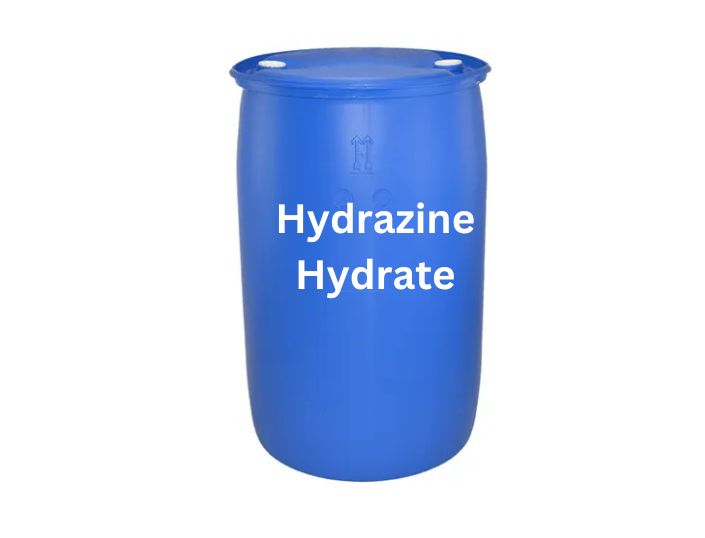
Product Pack Size
Shakti Chemicals typically offers Hydrazine Hydrate in:
200 kg steel/plastic drums
1,000 kg IBC (tote) containers
Isotanks/tank trailers for bulk transport
Same as global standard packaging.
Applications of Hydrazine Hydrate
Boiler Water Treatment: Acts as an oxygen scavenger to prevent corrosion, decomposes to ammonia to maintain alkalinity.
Polymer Production: Chain extender and precursor for blowing agents in polyurethane manufacture.
Organic Synthesis: Employed in Wolff–Kishner reductions, chain elongation, pharmaceutical intermediate synthesis.
Rocket Propellant: Used in hypergolic mixtures with dinitrogen tetroxide that ignite spontaneously on contact.
Corrosion Inhibition: Removes dissolved oxygen in aqueous systems to prevent metal corrosion.
Agrochemical Synthesis: Raw material for pesticides and herbicides.
Metal Reduction: Reducing agent in metal and halogen reduction reactions.
FAQs
1. What grades are available?
– Technical/industrial grades with hydrazine content from 64 % to 80 %+. Purity often ≥ 80 % and heavy metals < 5 ppm.
2. Is it stable at room temperature?
– Yes. It remains stable when stored cool (< 25 °C) and sealed. Degrades at elevated temperatures.
3. What materials are compatible?
– Stainless steel (304L, 316), PTFE, polyethylene are suitable. Avoid copper, brass, and aluminum .
4. Is it flammable?
– Yes. It is a combustible liquid. Avoid ignition sources; store per hazard class requirements .
5. How is spill cleanup managed?
– Use inert absorbents, contain spillage, neutralize, and dispose of via licensed waste firms.
6. How to transport Hydrazine Hydrate?
– Classified as UN 2030; requires Class 8 corrosive + Class 6.1 toxic, Packaging Group II compliance.
7. Can it be used in rocket fuel?
– Yes. When combined with dinitrogen tetroxide, it forms a hypergolic propellant.
8. How does it act as an oxygen scavenger?
– It reacts with dissolved oxygen, forming nitrogen and water—protecting boiler metals.
9. What safety measures are required?
– Fume hoods, PPE, eye/skin protection, proper ventilation, and compliance with GHS pictogram labels (e.g. carcinogen, toxic, corrosive).
10. What industrial sectors use it?
– Water treatment, polymers/chemicals, pharma, agrochemicals, metallurgy/mining, aerospace.
In summary, Hydrazine Hydrate is a versatile and powerful chemical—serving as a reducing agent, oxygen scavenger, polymerization aid, and intermediate across multiple industries. When sourced from trusted exporter suppliers, traders, dealers, importers, and distributors like Shakti Chemicals in Maharashtra, it ensures consistent quality, compliance, timely delivery, and expert technical support. Despite its indispensable benefits, it demands responsible handling due to its toxicity, corrosiveness, and environmental hazards. With correct safety protocols in place, Hydrazine Hydrate remains a critical asset for industries seeking high-performance, reactive chemical solutions.
Get in Touch with Us
Interested in Hydrazine Hydrate for your application? Connect with us for bulk inquiries, samples, and product customization.
Contact Us- Address: 206-207, 2nd Floor, Wadala Udhyog Bhavan, Naigaon Cross Road, Wadala (West)
- Email: info@shaktichemicals.org
- Phone: +91 4044 0000